Pest ID
Identify aiptasia, planaria, bristleworms, AEFW and other reef pests from a photo — and pick the removal method that actually works.
The Saltwater
Aquarium Pest ID
Field Guide
A working hobbyist’s reference to the hitchhikers, parasites, and nuisance organisms that show up uninvited in reef tanks. Identify what you’ve got, learn its life cycle, and pick the right removal strategy before it spreads.
Conditional, monitor or remove
Mostly harmless
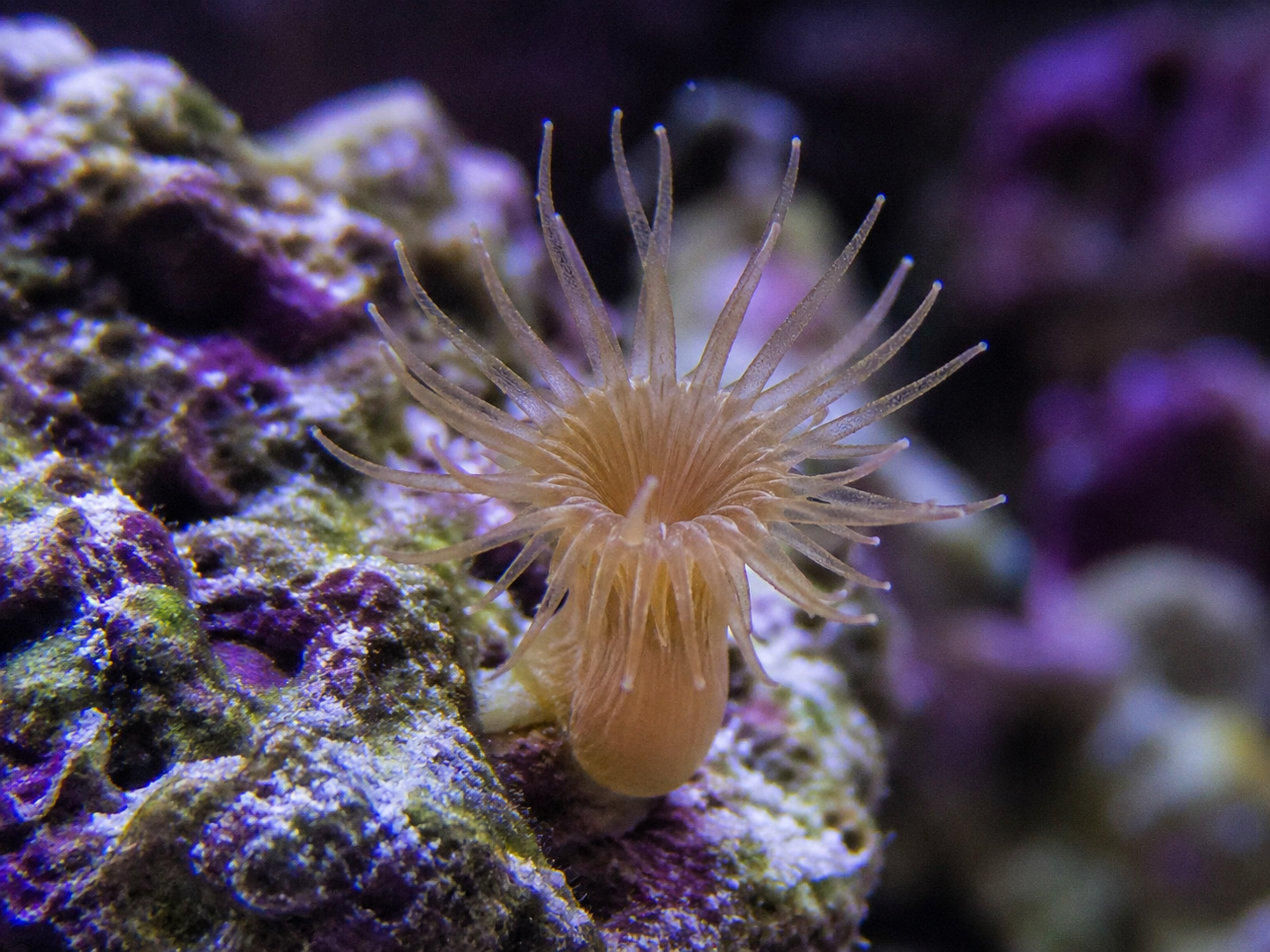
Aiptasia Anemone
Harmful
Description
The most notorious pest in reef keeping. A small, translucent brown to tan anemone with a long stalk and clear, wispy tentacles. Retracts instantly into rock when disturbed.
Threat Level
Harmful. Aiptasia carries a powerful sting that damages neighboring corals, multiplies aggressively, and outcompetes desirable livestock for space and food. A single specimen can become hundreds within months.
Life Cycle
Reproduces both sexually (broadcast spawning) and asexually through pedal laceration, where small pieces of the foot break off and grow into new anemones. Damaging an Aiptasia without killing it cleanly almost guarantees more will appear.
Recommended Removal
- Berghia nudibranchs, the gold standard. They eat only Aiptasia and clear tanks completely over weeks to months.
- Peppermint shrimp (Lysmata wurdemanni), effective on small specimens, hit or miss with larger ones.
- Aiptasia-X, Joe’s Juice, or kalkwasser paste injected directly into the oral disc.
- Copperband butterflyfish or Klein’s butterflyfish for larger systems.
- Avoid scraping or crushing in tank, this spreads them.
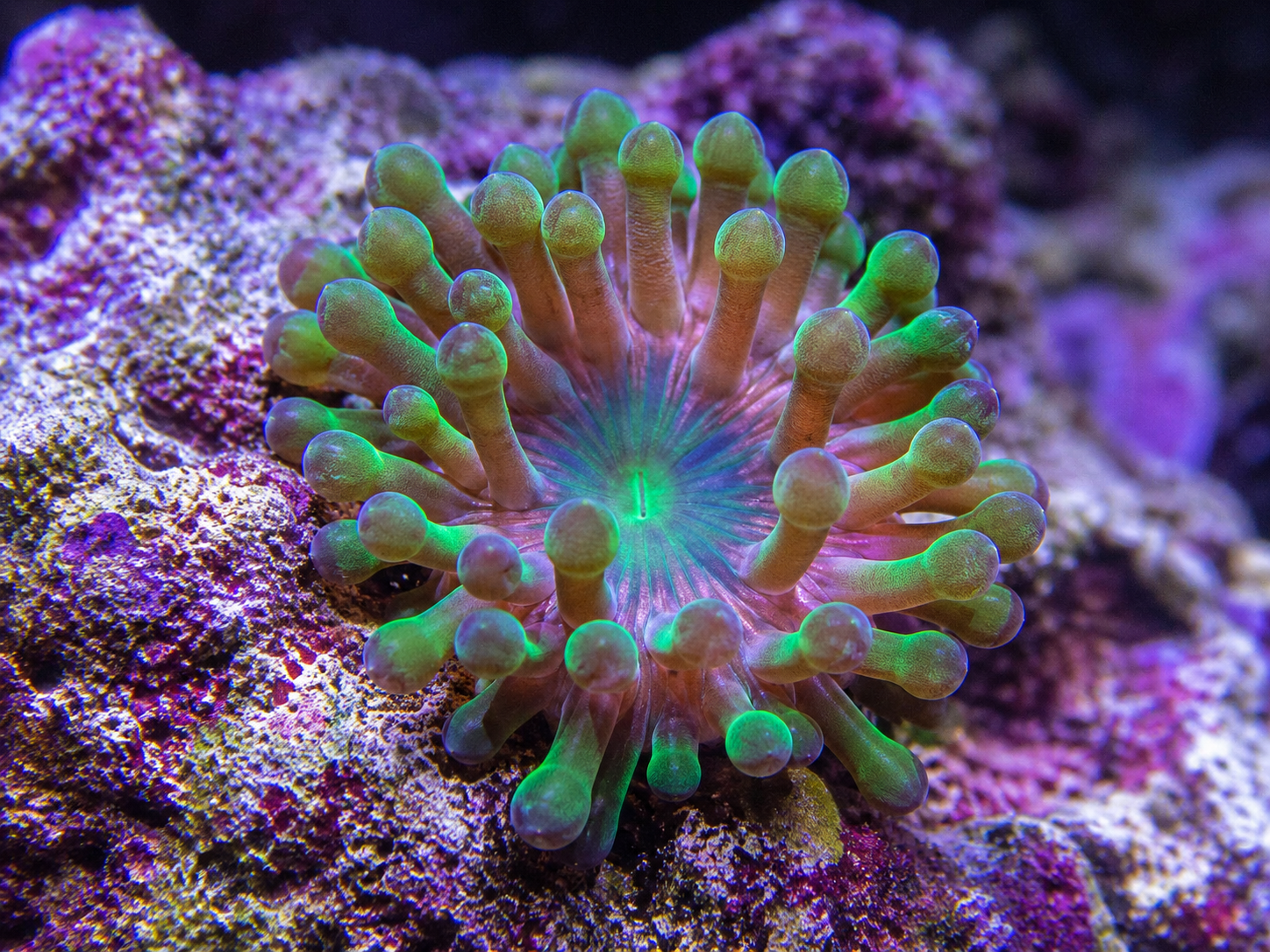
Majano Anemone
Harmful
Description
Often confused with Aiptasia, but Majanos have a shorter stalk, stubby green or brown tentacles tipped with white or purple, and a more ball-like silhouette. They photosynthesize, so they prefer high light.
Threat Level
Harmful. Stings nearby corals, reproduces rapidly, and can detach and float to new spots. Releases spores when threatened, which makes sloppy removal counterproductive.
Life Cycle
Reproduces by pedal laceration and budding. Like Aiptasia, agitating without fully killing causes spread.
Recommended Removal
- Bristletail filefish (Acreichthys tomentosus), the most reliable predator, though not fully reef-safe with zoas, mushrooms, or clams.
- Chemical injection with Aiptasia-X or kalkwasser paste.
- Majano Wand for in-tank zapping of larger specimens.
- Peppermint shrimp generally do not eat majanos.
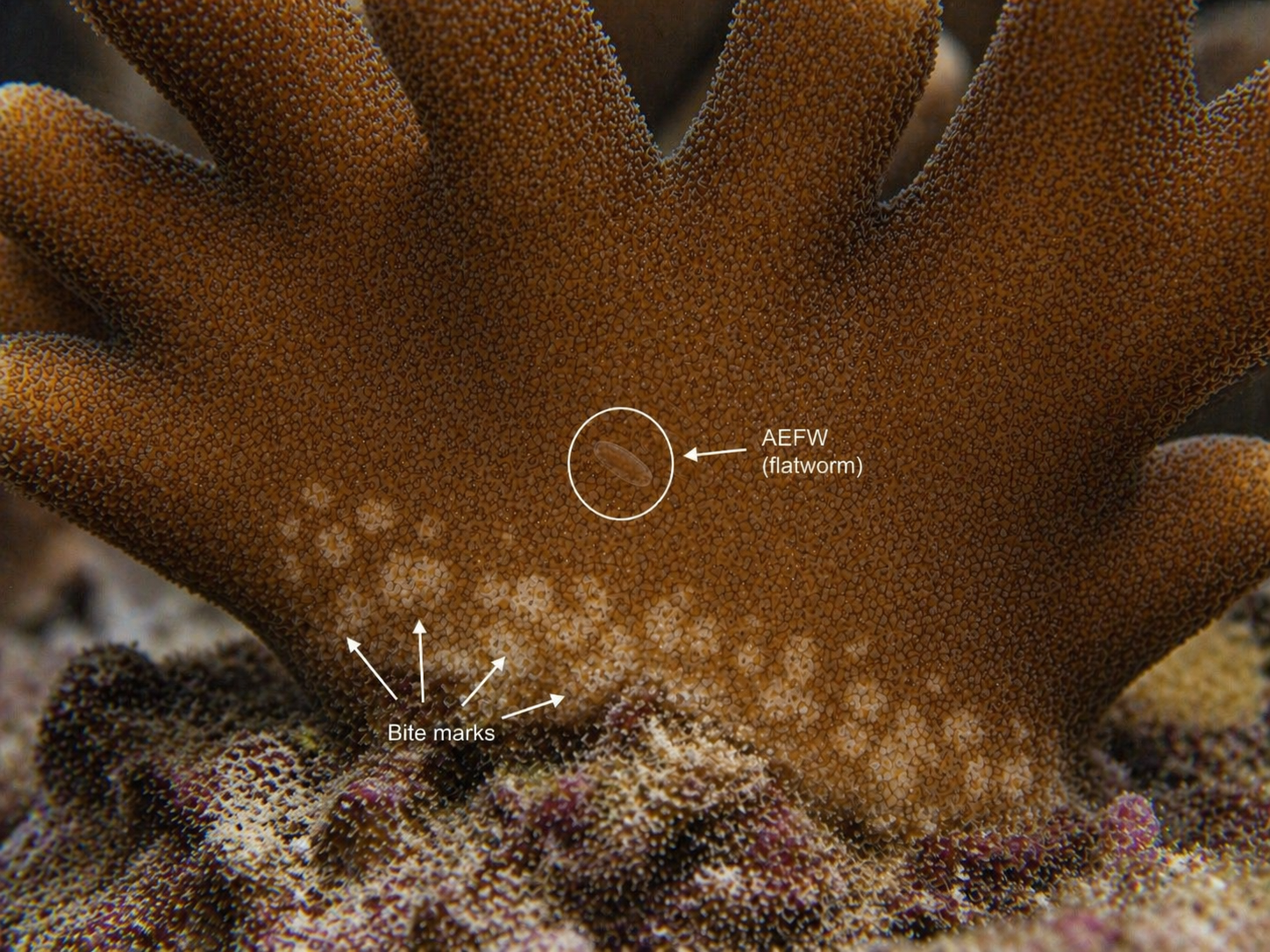
Acropora Eating Flatworm (AEFW)
Harmful
Description
An oval, transparent flatworm that perfectly camouflages against Acropora tissue. Almost impossible to see directly, usually identified by bite marks (white patches with the skeleton showing) and the distinctive oval egg clusters laid on bare coral skeleton.
Threat Level
Harmful. One of the most destructive coral pests. Will systematically strip tissue from an Acropora colony and move on to the next one.
Life Cycle
At 27°C (typical reef temp), eggs hatch in about 11 days, and flatworms reach sexual maturity around 35 days, giving a generation time near 38 days. Cooler tanks slow the cycle. Hatchlings can swim and survive up to 9 days without an Acropora host, which is how they spread between colonies. Eggs are extremely resistant to dips.
Recommended Removal
- Coral dips (Bayer, CoralRx, Revive) every 4 to 7 days for at least 6 weeks. Dips kill adults but not eggs, so repeat treatment is mandatory.
- Frag and dip, many keepers cut affected tips off, dip the frags, and move them to a clean QT system while letting the original colony die out.
- Wrasses from the genus Halichoeres (Melanurus, Yellow Coris, Six-line) eat adults but not eggs.
- Quarantine all new Acropora for 75+ days minimum.
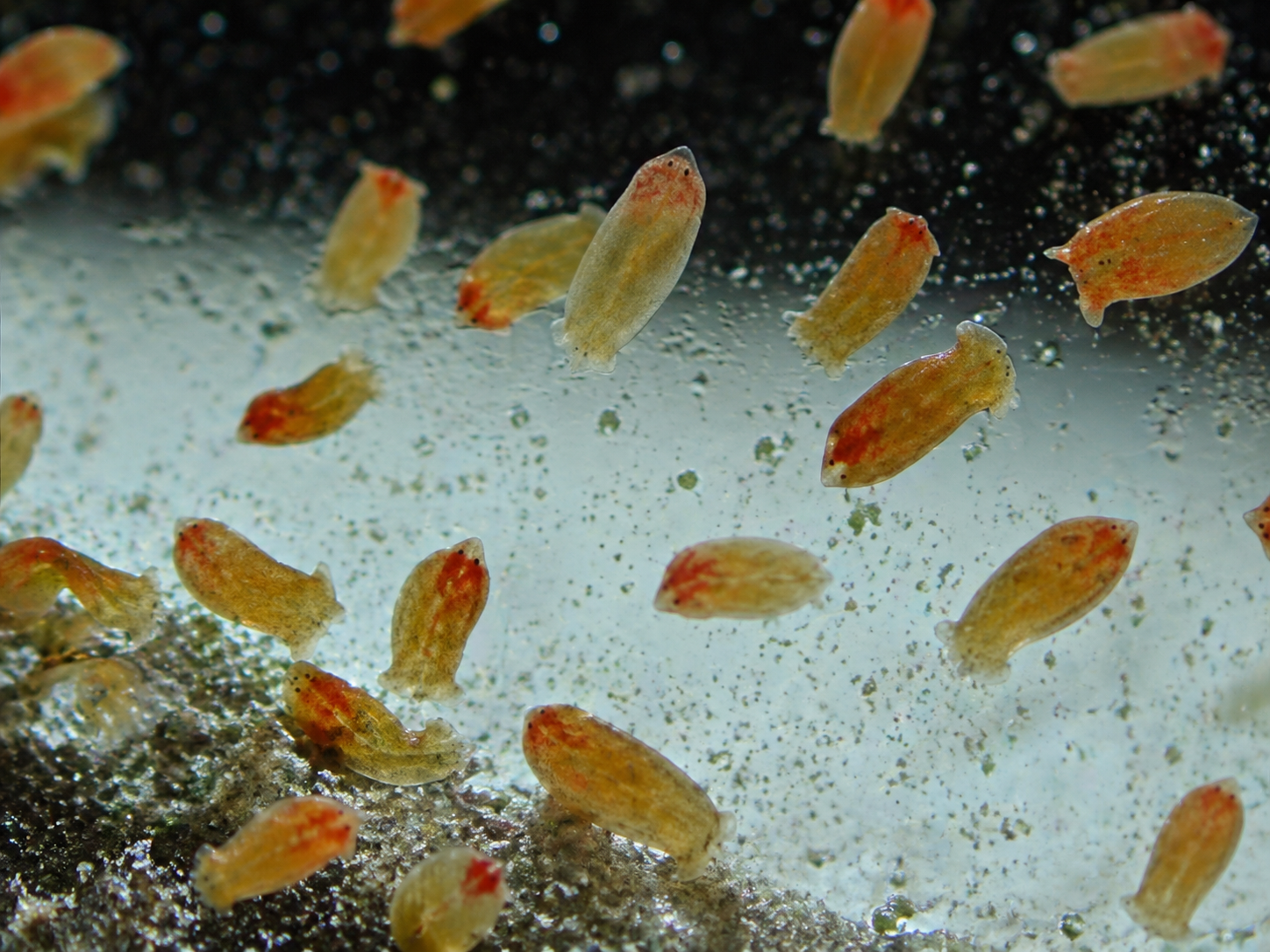
Red / Brown Planaria
Conditional
Description
Small reddish-brown to rust-colored flatworms that form mat-like carpets on rock, sand, and coral. Often a sign of excess nutrients and detritus.
Threat Level
Conditional. They don’t eat coral tissue directly, but they smother corals by blocking light and irritating polyps. Worse, they release toxins when they die in large numbers, so a poorly executed treatment can crash a tank.
Life Cycle
Reproduces by asexual budding and sexual reproduction. Populations explode rapidly under high-nutrient conditions.
Recommended Removal
- Siphon out as many as possible before any chemical treatment. This is the single most important step.
- Salifert Flatworm eXit, effective but use carbon and water changes immediately after to remove toxins.
- Six Line Wrasse, Leopard Wrasse, Target Mandarin, or Yellow Coris as biological control.
- Fix underlying nutrient issues, excess detritus is the root cause.
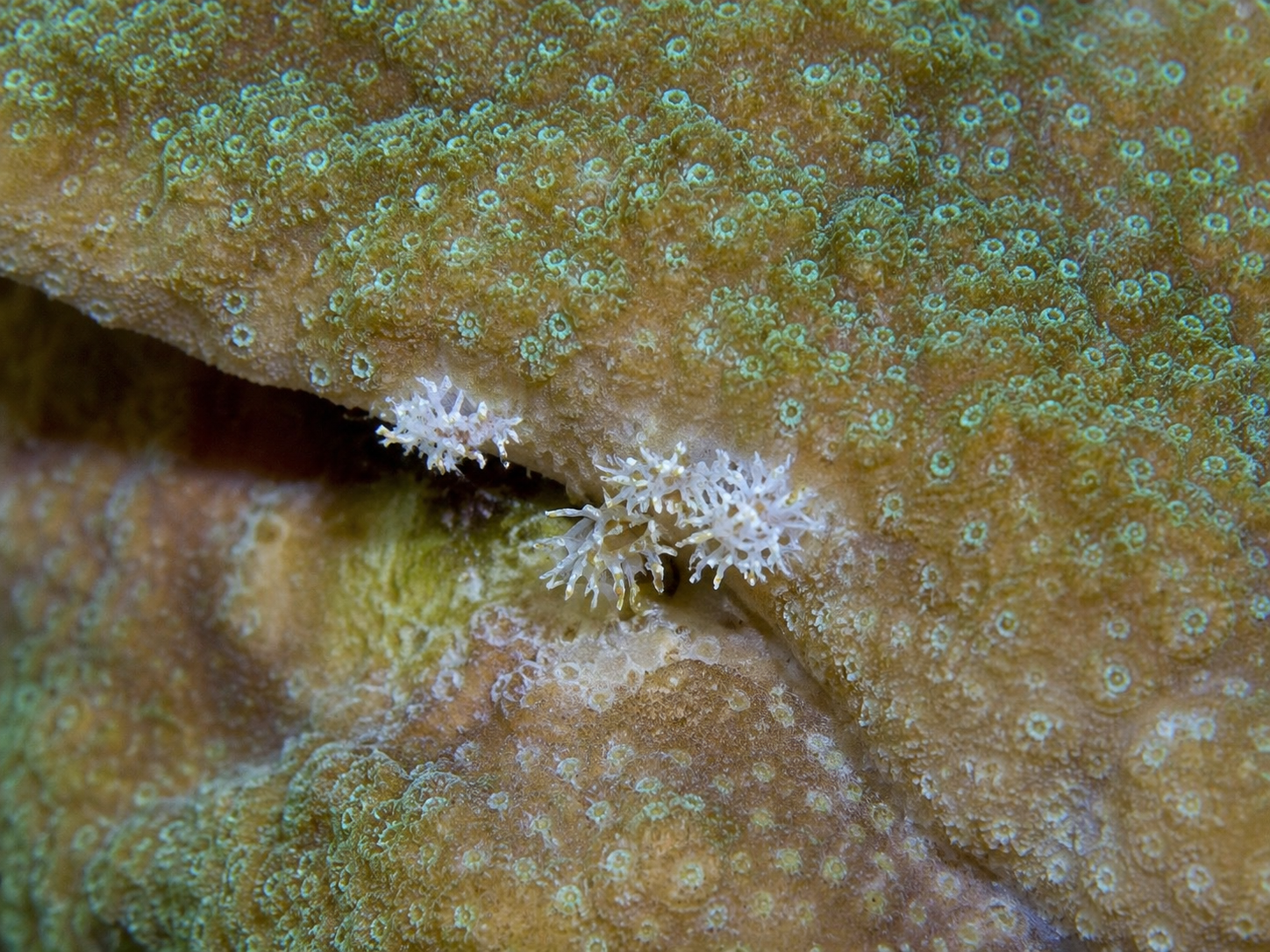
Montipora Eating Nudibranch
Harmful
Description
Tiny white or cream-colored aeolid nudibranch with a stringy, knotted appearance. Mimics Montipora polyps almost perfectly. Often spotted only by the damage it leaves: pale, expanding patches of dead tissue along plate edges.
Threat Level
Harmful. Will systematically destroy every Montipora colony in the system, including encrusting, plating, and digitate forms.
Life Cycle
Hermaphroditic. Lays clusters of around 100 eggs that hatch in 36 to 96 hours. Hatchlings reach sexual maturity in under a week, so populations can explode quickly. Eggs are typically laid on the underside of plating Montipora or on adjacent rock.
Recommended Removal
- Quarantine all new Montipora for 3 months, non-negotiable for serious keepers.
- Coral dip (CoralRx, Bayer) with vigorous turkey-baster blasting every 4 to 8 days.
- Manual egg removal with tweezers, flip the coral and inspect the underside.
- Wrasses (Yellow Coris, Melanurus, Six-line) help control adults.
- If a colony is heavily infested, fragging clean tips and discarding the rest is often the cleanest option.
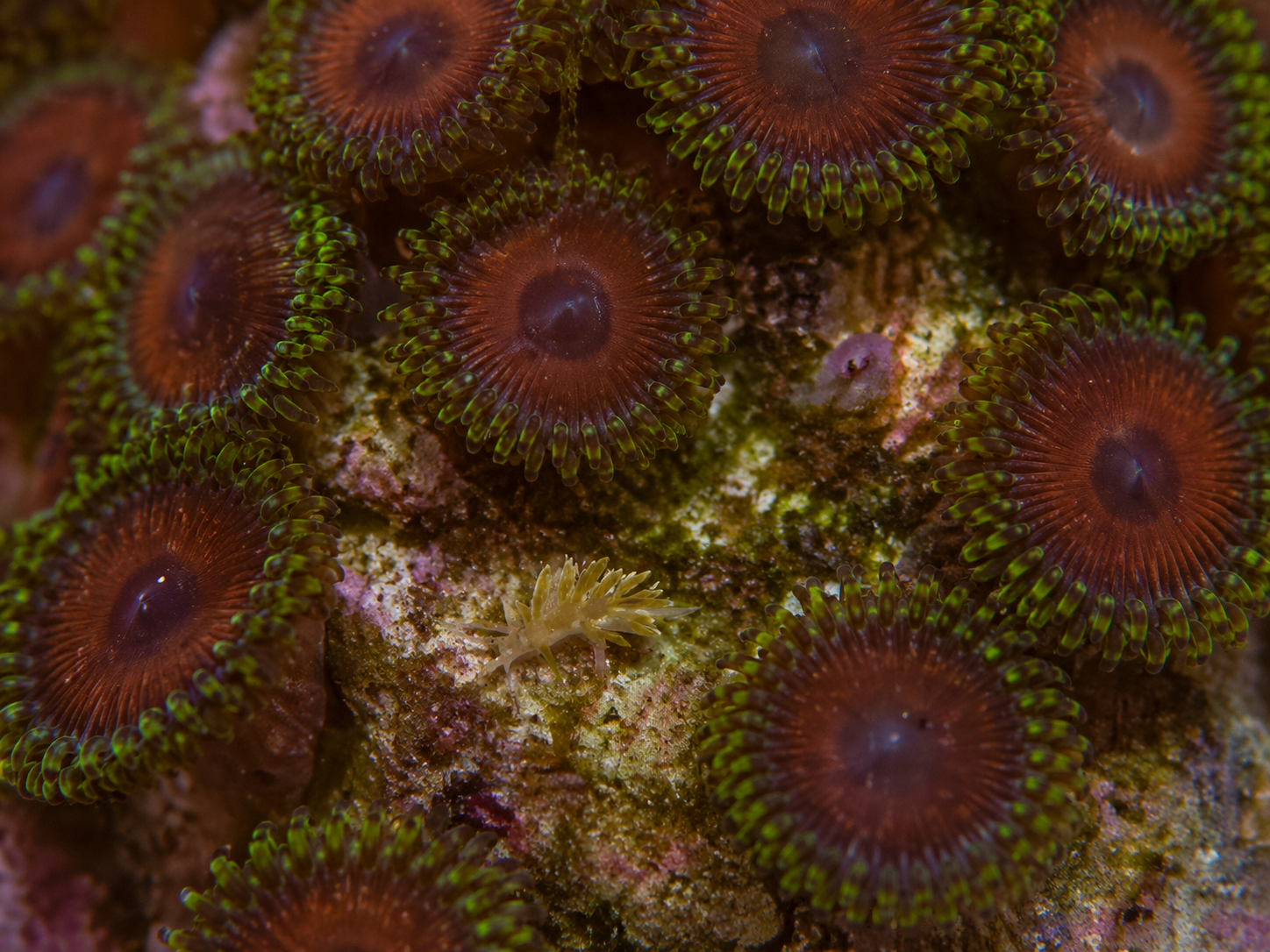
Zoanthid Eating Nudibranch
Harmful
Description
A frilly aeolid that adopts the coloration of the zoanthids it eats, making it nearly invisible against the polyp mat. Eggs are laid in a tight spiral pattern on or near the zoanthid stalks.
Threat Level
Harmful to zoanthids and palys. Closed or receding zoa polyps are often the first warning sign.
Life Cycle
Egg masses are spiral-coiled and hatch within days. Population grows quickly inside the polyp mat where they remain hidden.
Recommended Removal
- Short freshwater dip (RO/DI, temperature and pH matched, 5 minutes max), kills adults but not eggs. Repeat weekly.
- Coral dip (CoralRx, Bayer) with thorough basting between polyps.
- Manual egg removal with tweezers under magnification.
- Quarantine new zoa frags for at least 6 weeks.
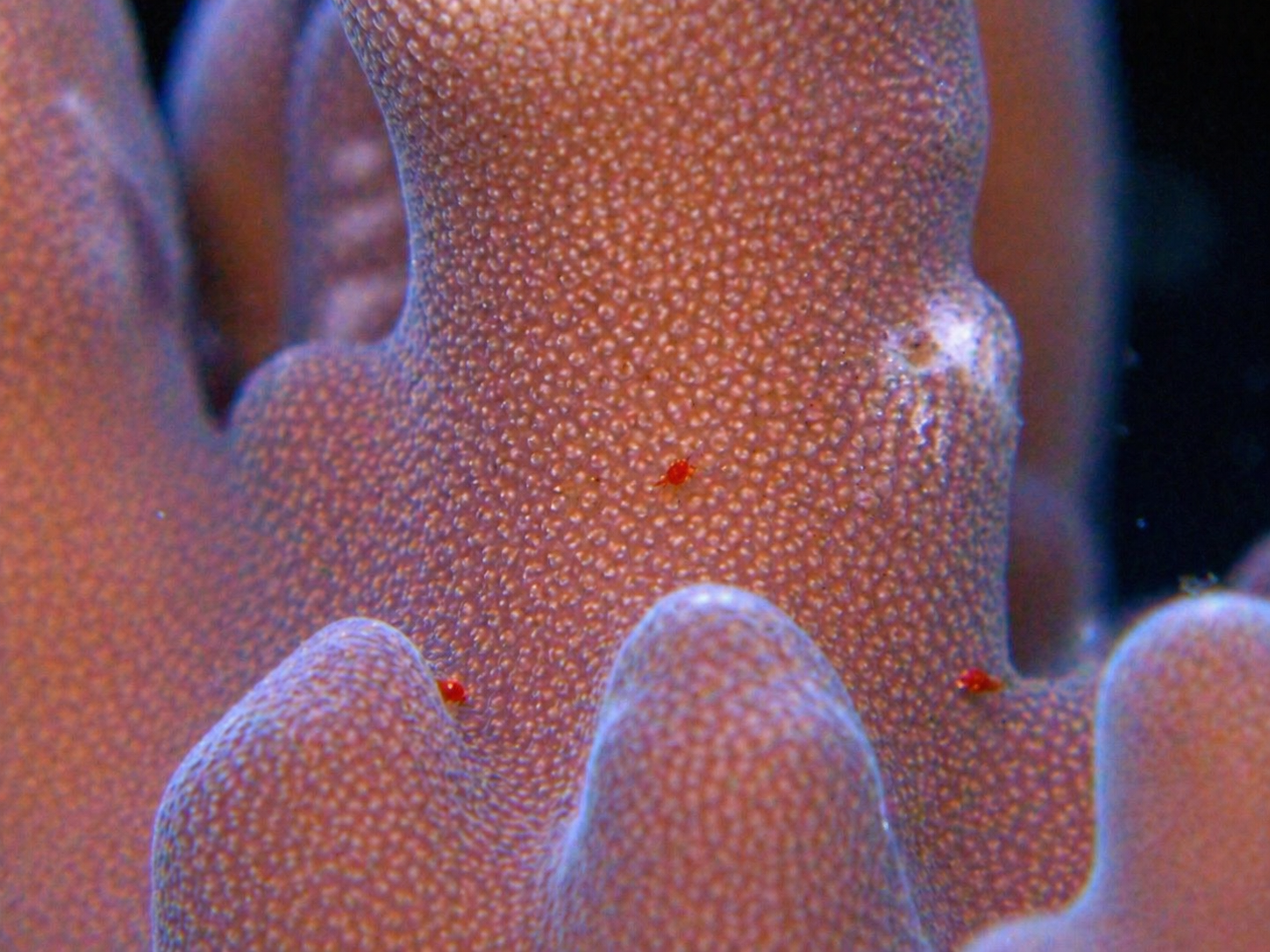
Red Bugs
Harmful
Description
Tiny parasitic copepods that look like yellow flecks with a single red dot. Found exclusively on smooth-skinned Acropora species.
Threat Level
Harmful. Won’t kill a coral outright, but causes color loss, polyp closure, and stunted growth. Spreads from frag to frag.
Life Cycle
Free-swimming nauplii hatch from eggs and quickly attach to Acropora hosts. Generation times measured in days under reef conditions.
Recommended Removal
- Milbemycin oxime (sold as Interceptor for dogs), the standard treatment, requires a vet’s prescription. Kills all crustaceans, so remove crabs, shrimp, and pods first.
- Three-dose treatment in the display tank, six days apart, with carbon between doses.
- For QT, dip Acros in milbemycin solution and return to a separate clean system.
- No reliable natural predators.
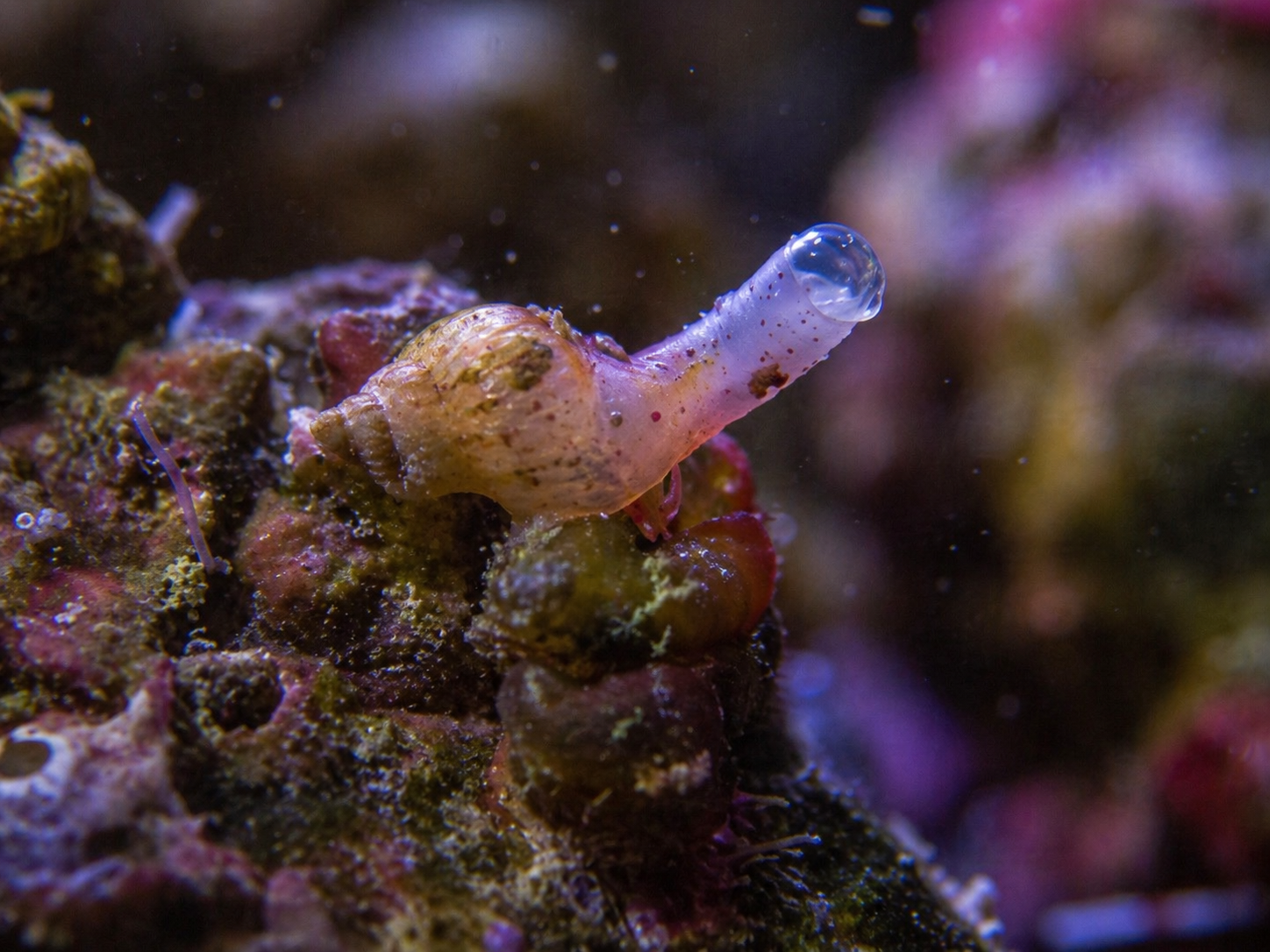
Vermetid Snails
Harmful
Description
Sessile snails that build calcareous tubes attached to rock and coral. Often mistaken for tubeworms. Cast out a sticky mucus web to capture food, which is what makes them a problem.
Threat Level
Harmful. The mucus webs irritate corals on contact, possibly carry pre-digestive enzymes that damage tissue, and reduce coral growth. Tubes are sharp and will draw blood when you reach into the tank.
Life Cycle
Broadcast spawners. Once a population establishes, larvae spread throughout the system and settle on hard surfaces, multiplying into the hundreds or thousands.
Recommended Removal
- Manual removal, break tubes off with bone cutters, pliers, or a chisel. Crush the snail or it will rebuild.
- Super glue gel, cap the tube opening to starve the snail.
- Bumblebee snails (Engina mendicaria), the most reliable predator, though they will also eat other inverts.
- Reduce broadcast feeding, vermetids thrive on liquid foods and frozen mysis residue.
- Severe infestations: remove rock, scrub, and dip in a 10 to 20 percent muriatic acid solution outside the tank.
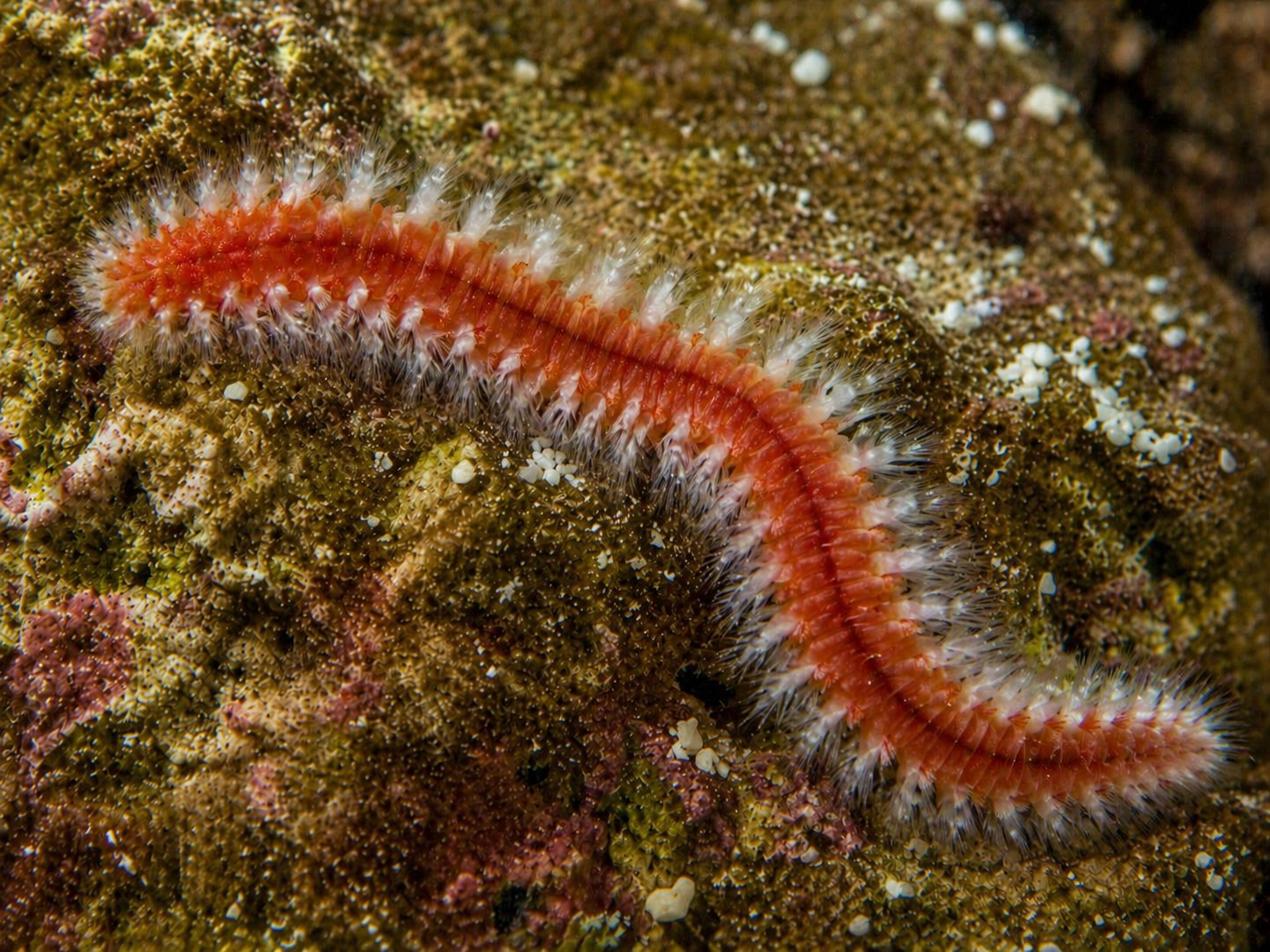
Bristleworms / Fireworms
Conditional
Description
Segmented worms with rows of white bristles along their body. The common Eurythoe-type bristleworm is a beneficial detritivore. The fireworm (Hermodice carunculata) is much larger, more aggressive, and predatory.
Threat Level
Conditional. Most bristleworms are valuable cleanup crew that consume detritus and uneaten food. Fireworms and oversized specimens (over 6 inches) will eat sleeping fish, shrimp, snails, and corals. Bristles can deliver a painful sting to humans handling rock.
Life Cycle
Polychaetes reproduce by broadcast spawning and, in some species, fragmentation. Population scales directly with available food, which is why outbreaks indicate excess feeding.
Recommended Removal
- Leave small ones alone, under 4 inches, they’re net positive.
- Bristleworm trap, bait with shrimp at night, remove in the morning.
- Manual removal with tweezers, wear gloves to avoid stings.
- Predators: Arrow crab, Six Line Wrasse, Coral Banded Shrimp.
- Reduce overfeeding to control population growth.
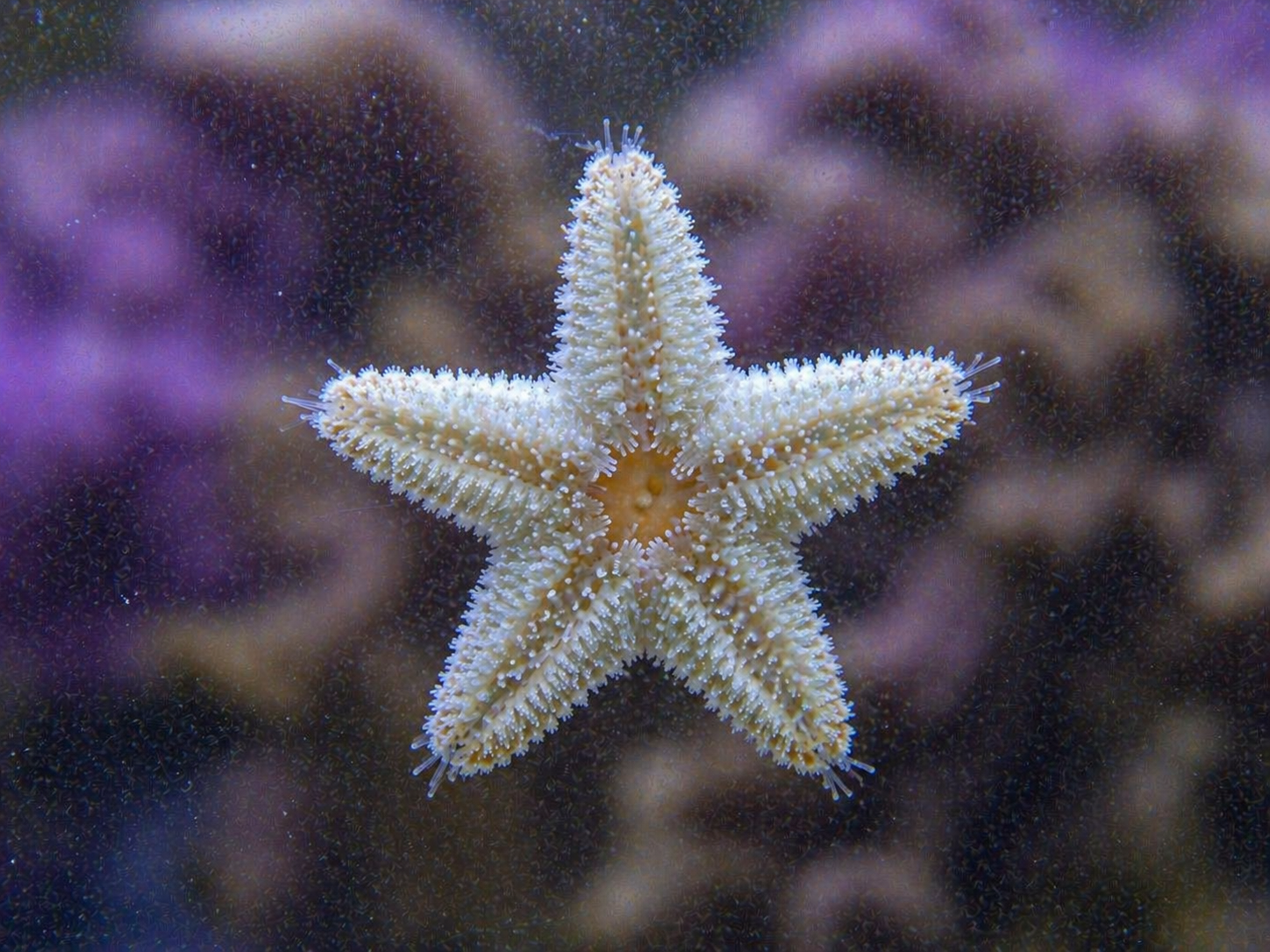
Asterina Starfish
Conditional
Description
Tiny, irregular-shaped starfish with 4 to 6 mismatched arms, white to tan with darker freckles. Common hitchhikers on live rock.
Threat Level
Conditional. Most species are harmless detritivores. A minority eat coral tissue, especially zoanthids, montiporas, and SPS. If you see them clustering on a coral that is receding, treat as harmful.
Life Cycle
Reproduces by asexual fission, they tear themselves apart and each piece regenerates into a new starfish. This is why infestations explode quickly.
Recommended Removal
- Manual removal with tweezers or forceps, easy because they don’t move fast.
- Harlequin shrimp (Hymenocera picta), eats nothing else but starfish, so plan for what you’ll feed it after the infestation.
- Don’t crush in tank, fragments regenerate.
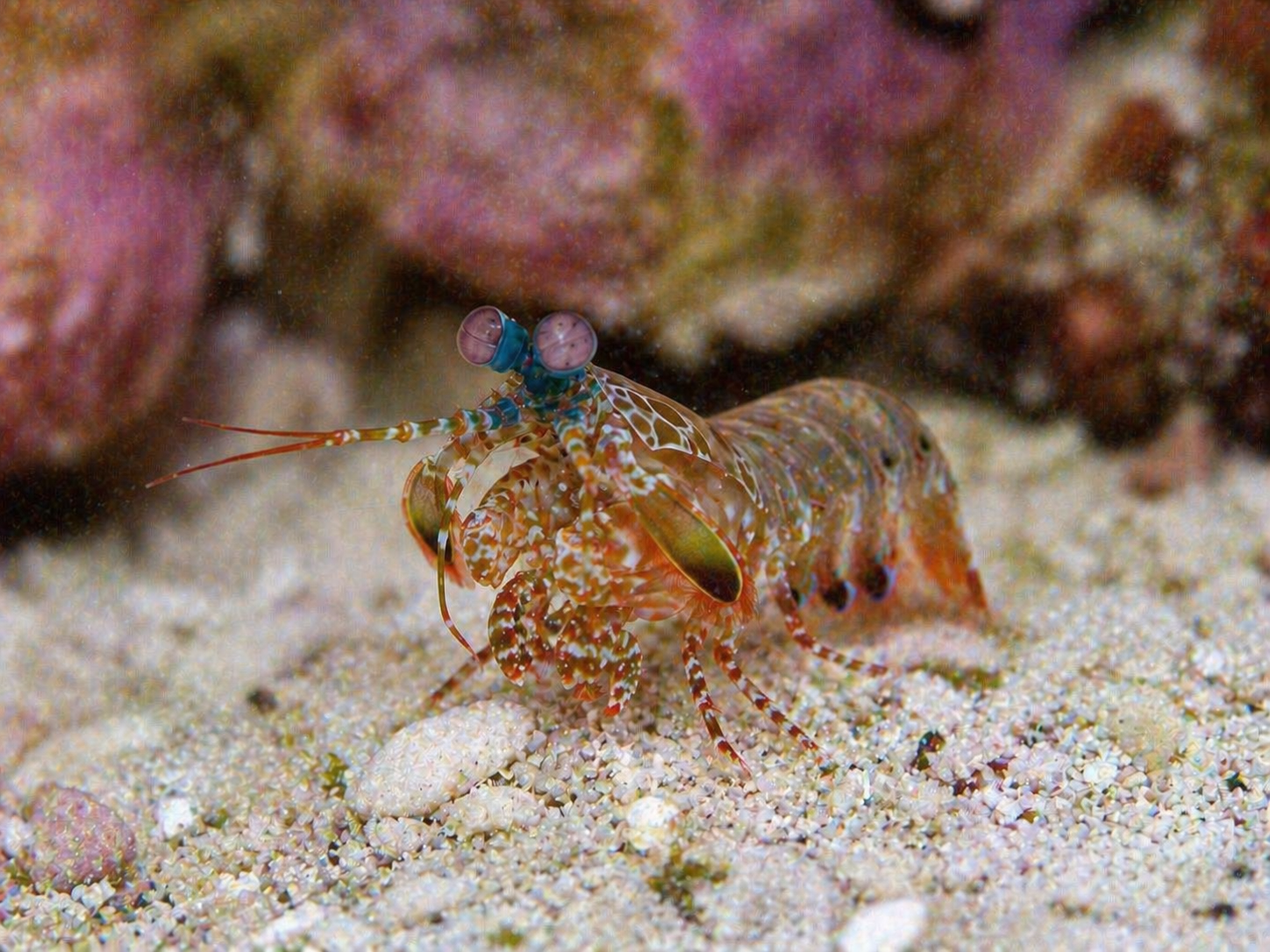
Mantis Shrimp
Harmful (in community tanks)
Description
Stout, brilliantly colored crustaceans with hammer-like or spear-like claws. Often heard before seen, a loud snapping or clicking from inside the rock is the giveaway. Smashers can crack aquarium glass; spearers impale fish.
Threat Level
Harmful in a community reef. Will hunt fish, snails, hermit crabs, and shrimp. Note: many keepers happily keep mantis shrimp on purpose in dedicated species tanks because they are fascinating animals.
Life Cycle
Reproduces sexually with internal fertilization. Females guard egg masses inside burrows. In a closed reef tank, they almost never breed, so the threat is the single hitchhiker.
Recommended Removal
- Identify the rock, usually one specific rock with a distinctive burrow entrance.
- Remove the rock and force the mantis out with a turkey baster of soda water or lukewarm freshwater.
- Mantis trap baited with shrimp.
- Wear thick gloves, large smashers can break a finger.
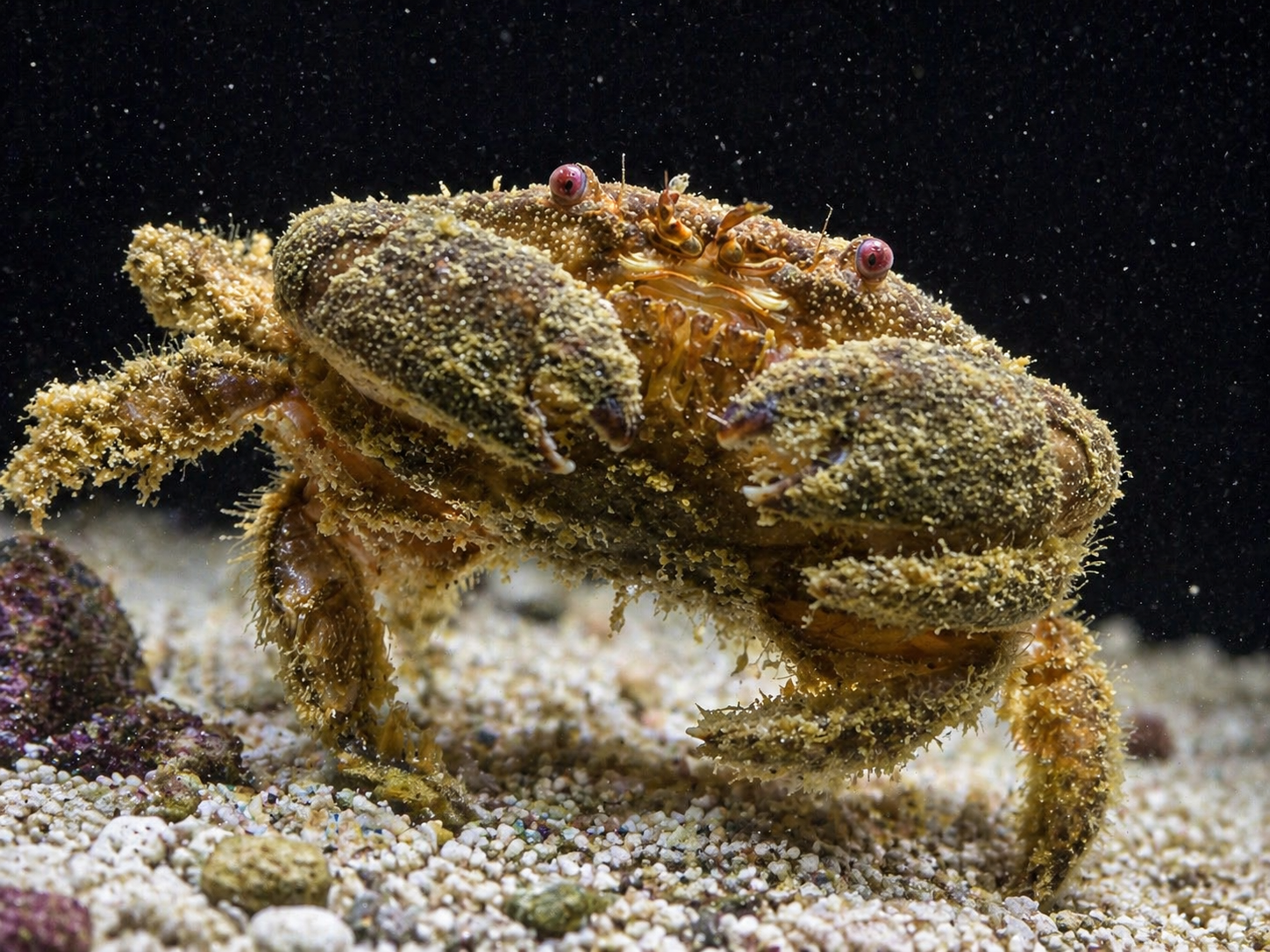
Gorilla Crab
Harmful
Description
Stocky, hairy crab with black tips on its claws. Often confused with the reef-safe Emerald Crab, but Gorilla Crabs are predatory.
Threat Level
Harmful. Will eat small fish, snails, shrimp, corals, and clams. Tends to grow significantly over time.
Life Cycle
Like most decapod crabs, broadcast spawners with planktonic larvae. Rarely breeds in closed systems.
Recommended Removal
- Crab trap baited with shrimp at night.
- Manual removal, pull the rock and physically extract.
- No reliable predator.
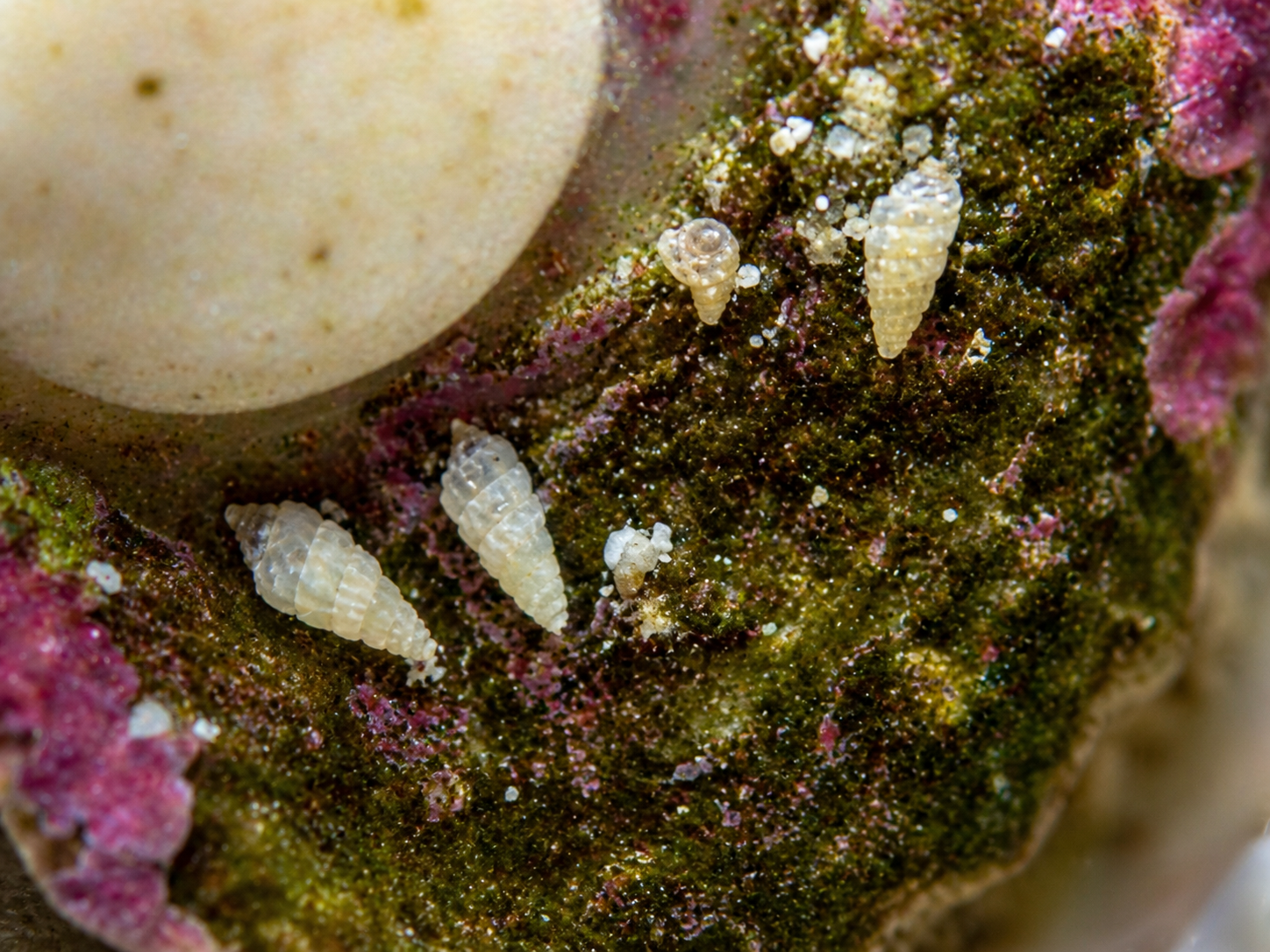
Pyramidellid Snails
Harmful
Description
Tiny white conical snails that parasitize Tridacna clams. Found clustered around the mantle edge or hidden in shell crevices, especially at night.
Threat Level
Harmful, specifically to clams. They feed on clam fluids, causing mantle recession and eventually death.
Life Cycle
Lay small white egg ribbons directly on clam shells. Eggs hatch into free-swimming larvae that find new clam hosts. Generations can cycle in weeks.
Recommended Removal
- Inspect clams nightly with a flashlight and remove snails with tweezers.
- Freshwater dip the clam (RO/DI, temperature matched, 30 to 60 seconds), clams tolerate it but snails don’t.
- Scrape egg ribbons off the shell with a fingernail or soft brush.
- Six Line Wrasse and Yellow Coris Wrasse may help control them.
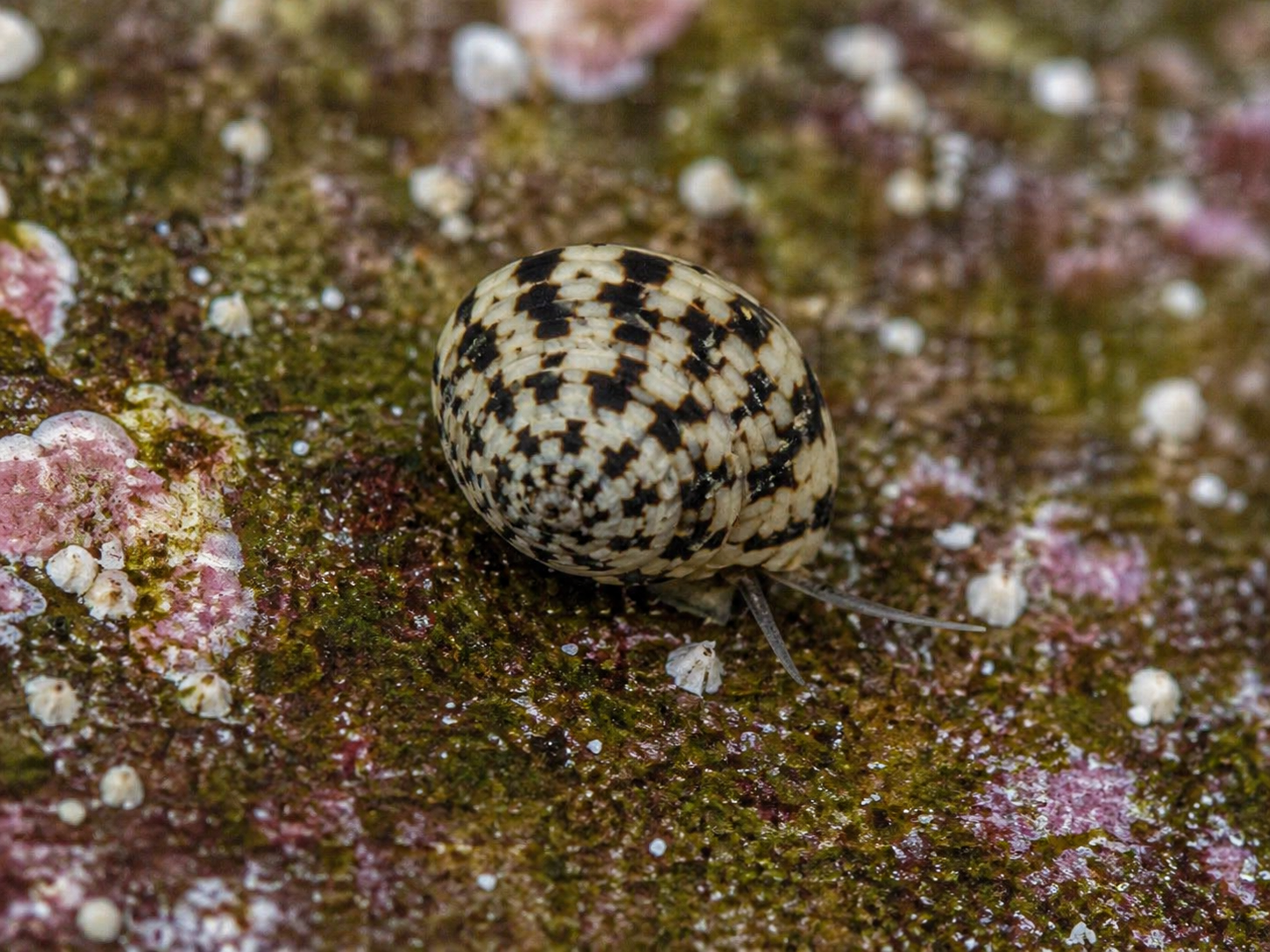
Sundial Snails
Harmful
Description
Small snails with a flat, disc-shaped spiral shell, usually banded brown and cream. Hide deep in zoanthid mats during the day.
Threat Level
Harmful to zoanthids and palys. Will graze polyps to nothing if left unchecked.
Life Cycle
Lay egg ribbons within the zoanthid mat. Reproduce slowly compared to nudibranchs but persistent.
Recommended Removal
- Manual removal at night with tweezers, they emerge to feed in the dark.
- Coral dip (CoralRx, Bayer) on new zoa frags before adding to display.
- Quarantine zoanthids for at least 4 weeks.
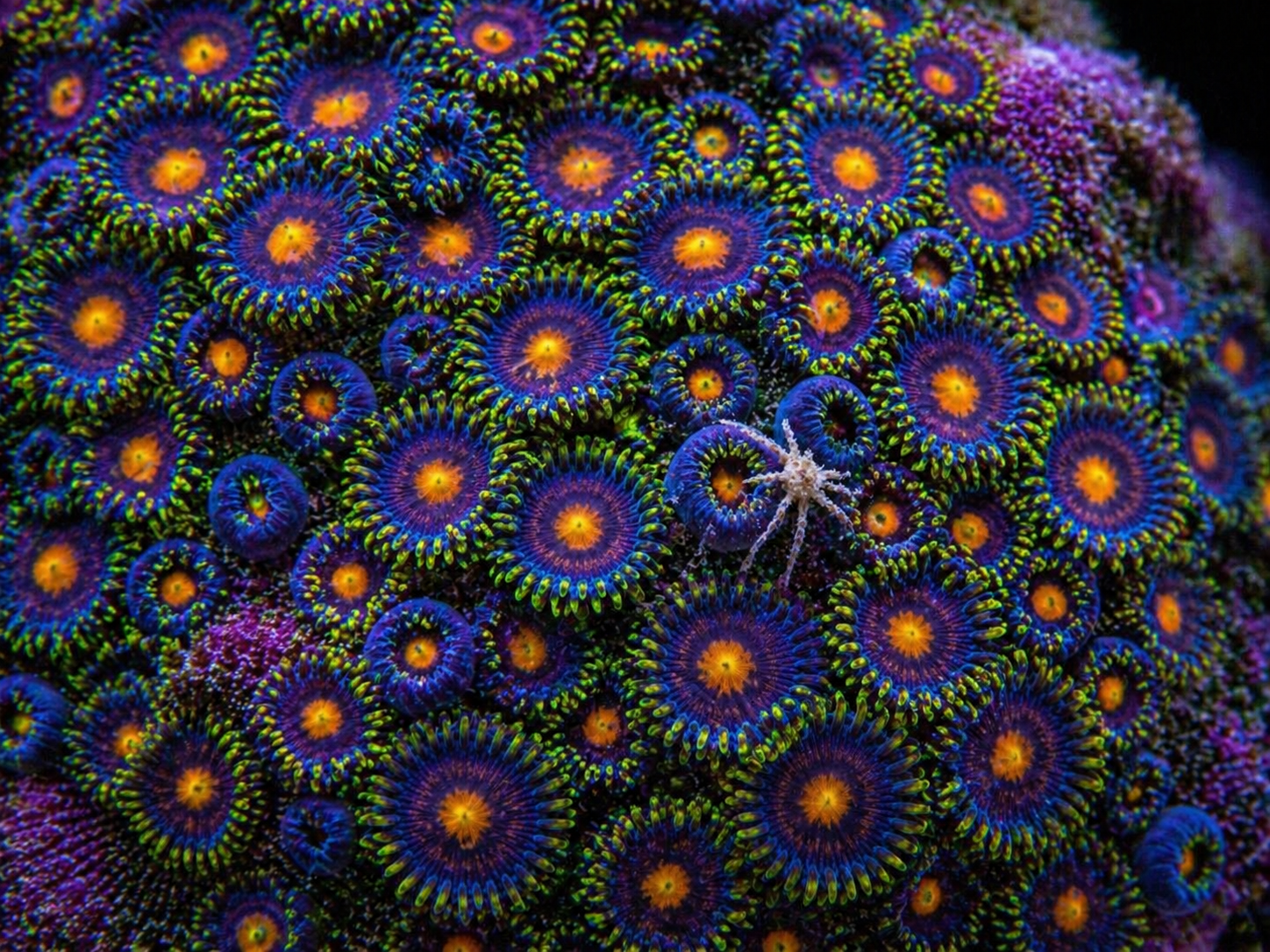
Sea Spiders (Pycnogonids)
Harmful
Description
Marine arthropods, not true spiders. Tiny body with 8 disproportionately long legs. Hide beneath zoanthid mucus and feed by piercing polyps with a proboscis.
Threat Level
Harmful to zoanthids. Causes closed and shrinking polyps. Difficult to spot because they live under the mucus layer where most dips and treatments cannot reach.
Life Cycle
Males carry eggs on their legs until they hatch. Generations are slow but persistent, making complete eradication difficult.
Recommended Removal
- Manual removal with tweezers, the most reliable method.
- Inspect zoa frags at night under bright light.
- Standard coral dips are minimally effective due to the mucus layer.
- Long quarantine (3 months) and frequent inspection.
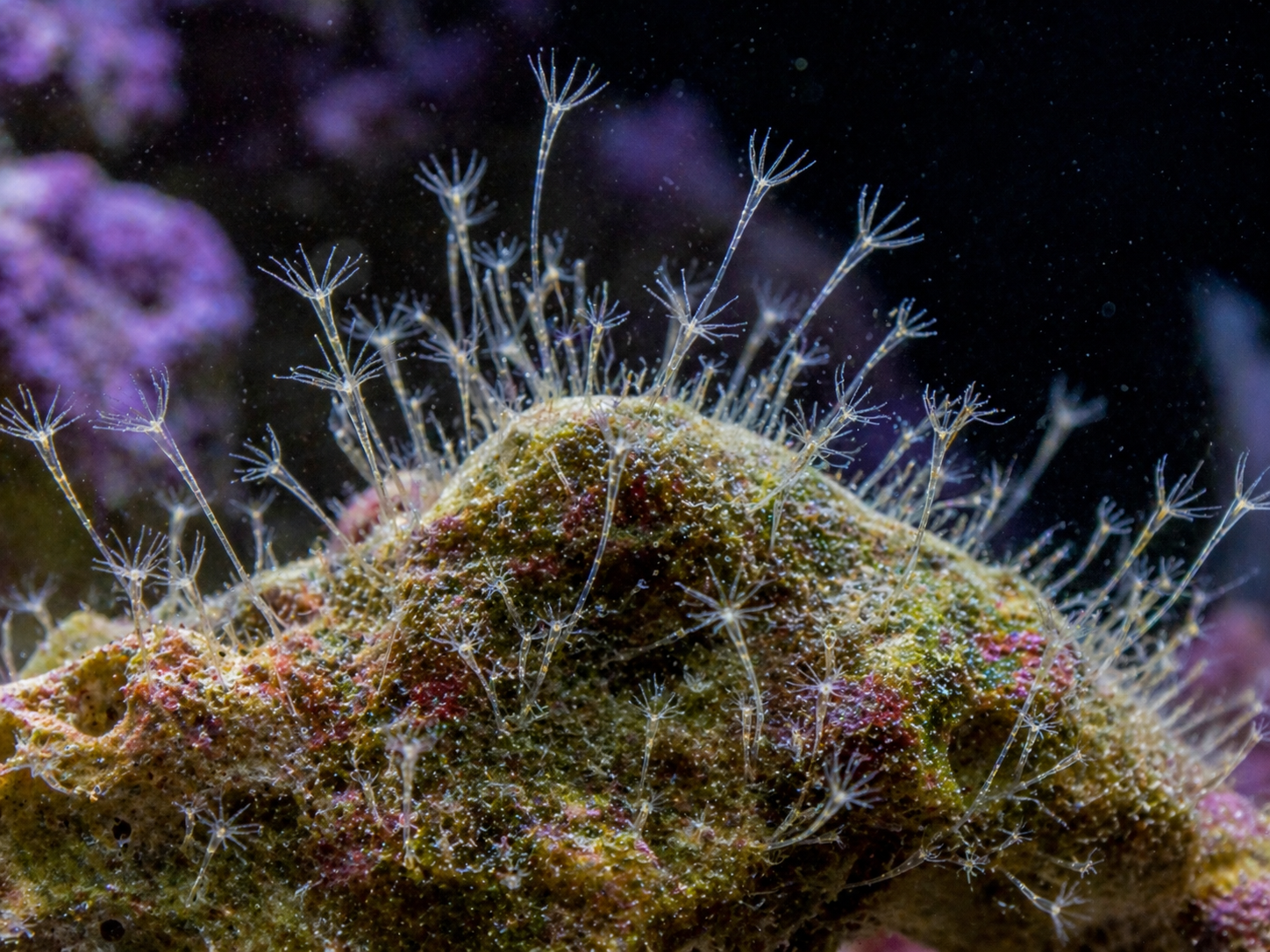
Hydroids
Conditional
Description
Branching, feather-like or stalked colonial cnidarians. Range from microscopic feather hydroids to bushy clusters several inches tall. Pack a powerful sting that irritates corals and stings keepers.
Threat Level
Conditional but trends harmful. Sting nearby corals, multiply via medusae (free-floating reproductive stage), and crowd out other livestock. Some are passive filter feeders, others are active predators of pods and fry.
Life Cycle
Alternates between attached polyp colony and free-swimming medusa stage. Medusae release gametes that settle as new polyps elsewhere in the tank, which is why outbreaks spread system-wide.
Recommended Removal
- Manual removal with tweezers; cut at the base of the stalk.
- Glue or epoxy over the base after cutting to prevent regrowth.
- Berghia nudibranchs may eat some hydroid species.
- Reduce nutrients, heavy feeding fuels outbreaks.
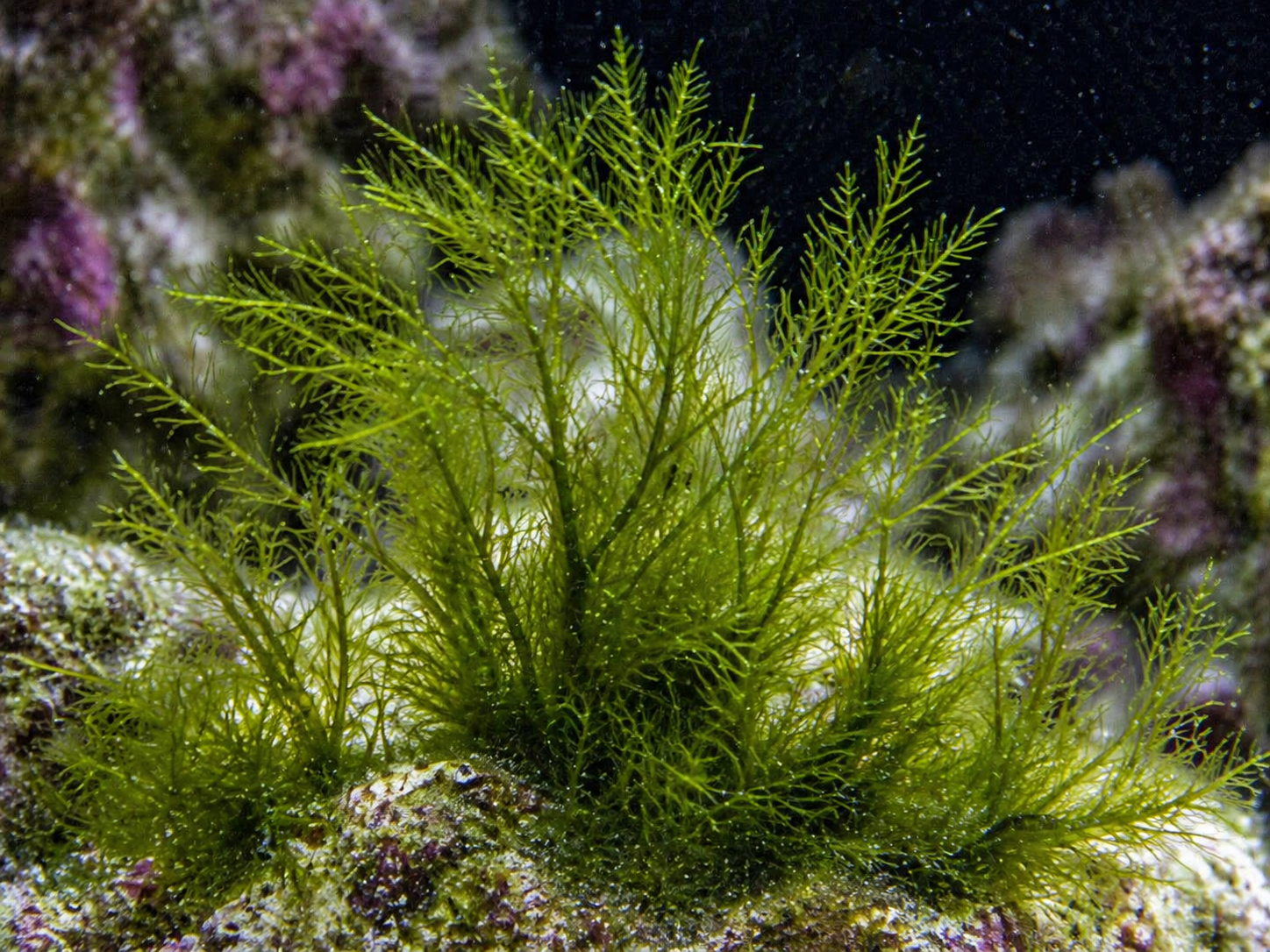
Bryopsis
Harmful
Description
A genus of feathery, fern-like green macroalgae. Often called hair algae, but distinct from true hair algae by its branched, plume-like fronds.
Threat Level
Harmful. Outcompetes corals, smothers rock, and is famously resistant to most cleanup crew animals. Notoriously hard to eradicate by manual removal alone.
Life Cycle
Reproduces by fragmentation and sexual reproduction. Tiny fragments regrow into full colonies, which is why scrubbing alone makes the problem worse.
Recommended Removal
- Fluconazole (sold as Reef Flux or human antifungal medication), the most effective treatment, dosed in the display tank. Typically clears bryopsis in 2 to 3 weeks with minimal coral impact.
- Elevated magnesium (around 1600 ppm using Tech-M historically, though this method is less reliable now).
- Sea hares (Aplysia) for short-term reduction.
- Manual removal alone is rarely successful.
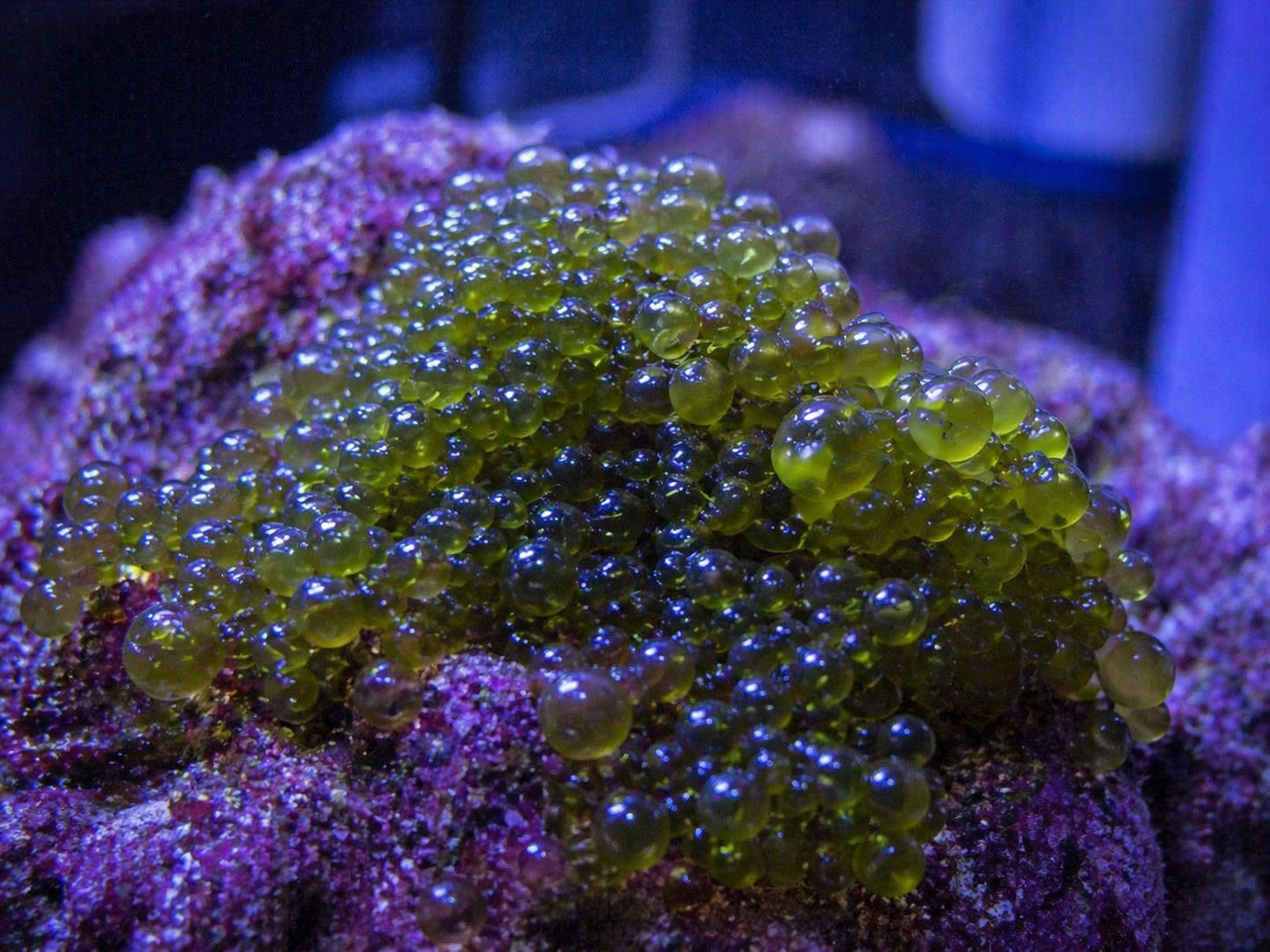
Bubble Algae
Conditional
Description
Glossy, balloon-like spheres of bright green algae. A single algal cell despite their size. Pop them and they release thousands of spores.
Threat Level
Conditional. Slow-growing in low quantities and tolerable. In high nutrient tanks, they spread rapidly and overgrow corals.
Life Cycle
Reproduces by releasing spores from ruptured cells. Popping a bubble in-tank seeds the system with new bubbles.
Recommended Removal
- Remove intact, gently rotate the bubble off the rock with tweezers without rupturing it.
- Emerald crabs (Mithraculus sculptus) are the classic predator.
- Naso tangs and some rabbitfish will eat them.
- Reduce phosphates to slow growth.
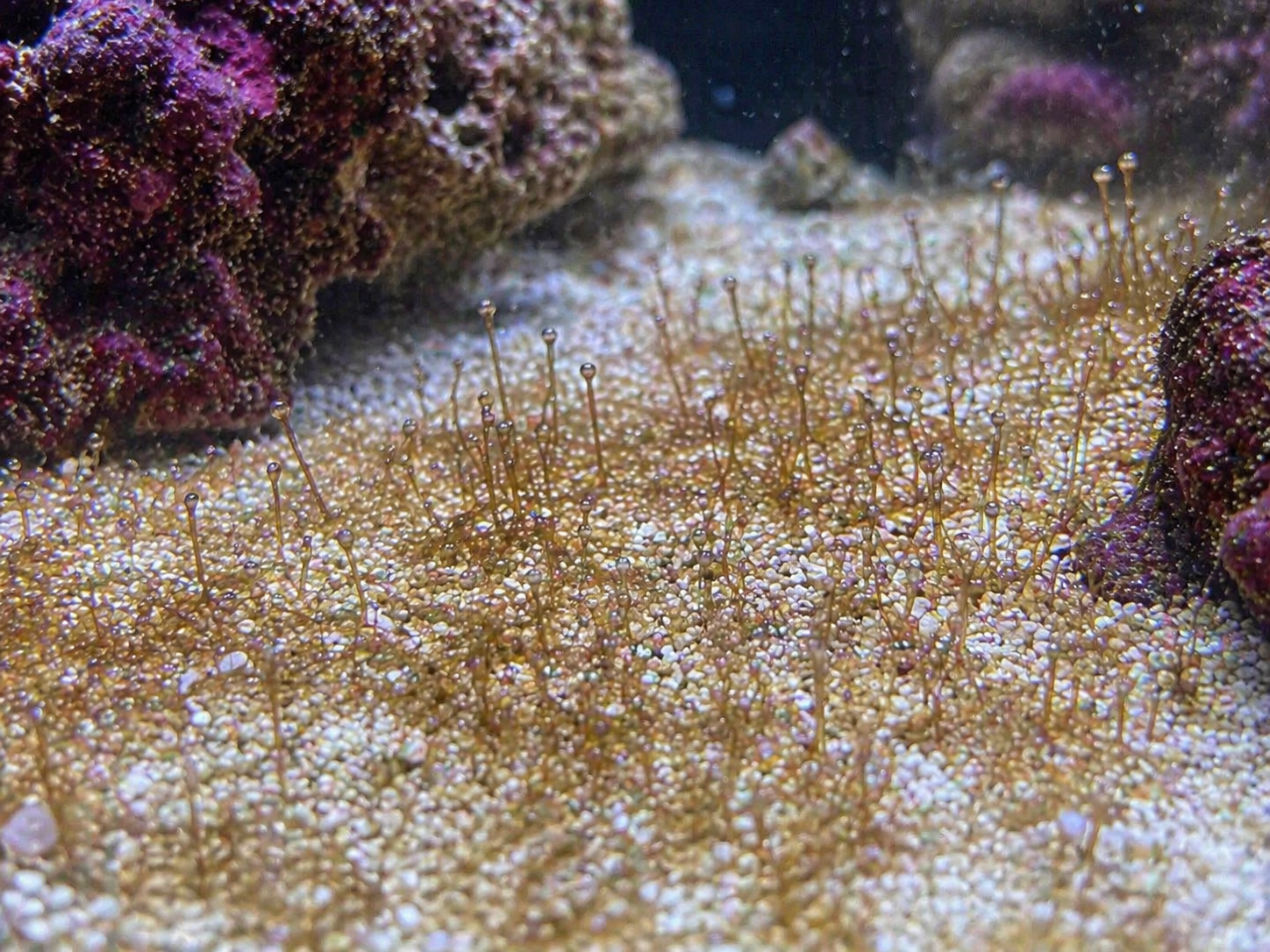
Dinoflagellates (“Dinos”)
Harmful
Description
Single-celled photosynthetic organisms forming brown, snotty, stringy mats with trapped oxygen bubbles. Often appear when nutrients (phosphate, nitrate) are pushed too low.
Threat Level
Harmful. Some species are toxic and can wipe out cleanup crew, fish, and corals. Notoriously difficult to clear because the standard starve-them-out approach fuels their growth.
Life Cycle
Photosynthetic during the day, can swim into the water column at night. Reproduce by binary fission, doubling daily under good conditions. Can encyst and survive blackouts.
Recommended Removal
- ID the species first, treatment depends on which dino you have. A microscope ($30 USB scope) is cheap insurance.
- Raise nutrients, many keepers dose nitrate and phosphate to break the cycle.
- UV sterilizer (25W+ at slow flow) for free-floating species like Ostreopsis.
- Diversify the microbiome with bottled bacteria, pod culture, and a refugium.
- 3-day blackout works for some species, harms others.
- Hydrogen peroxide dosing as a last resort, with caution.
Cyanobacteria (“Red Slime”)
Conditional
Description
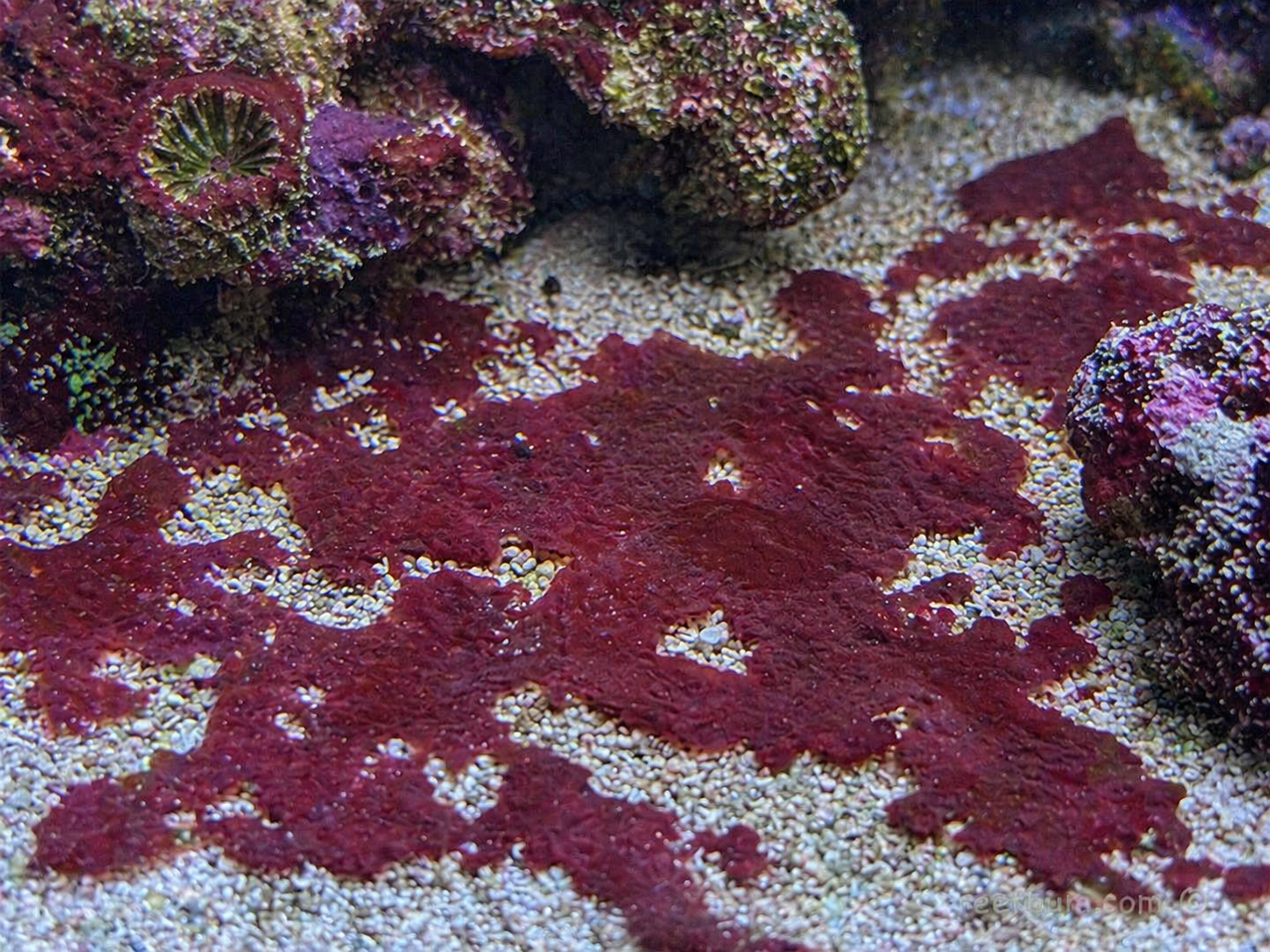
Photosynthetic bacteria, not algae. Forms thick, peelable mats in red, purple, blackish, or green, typically in low-flow areas of the sand and rock. Often releases oxygen bubbles.
Threat Level
Conditional. Smothers sand bed life, blocks light to corals, and indicates underlying water quality issues. Some species can be mildly toxic.
Life Cycle
Bacterial, reproduces by binary fission, doubling rapidly with surplus nutrients and low flow. Can fix nitrogen, so even low-nutrient tanks can host it.
Recommended Removal
- Increase flow in affected areas, the single most effective fix.
- Siphon out the mats during water changes.
- ChemiClean or Red Slime Remover as a temporary fix, paired with heavy water changes after.
- Address the cause: high phosphate, stagnant zones, or aged bulbs.
Marine Ich (White Spot Disease)
Harmful
Description
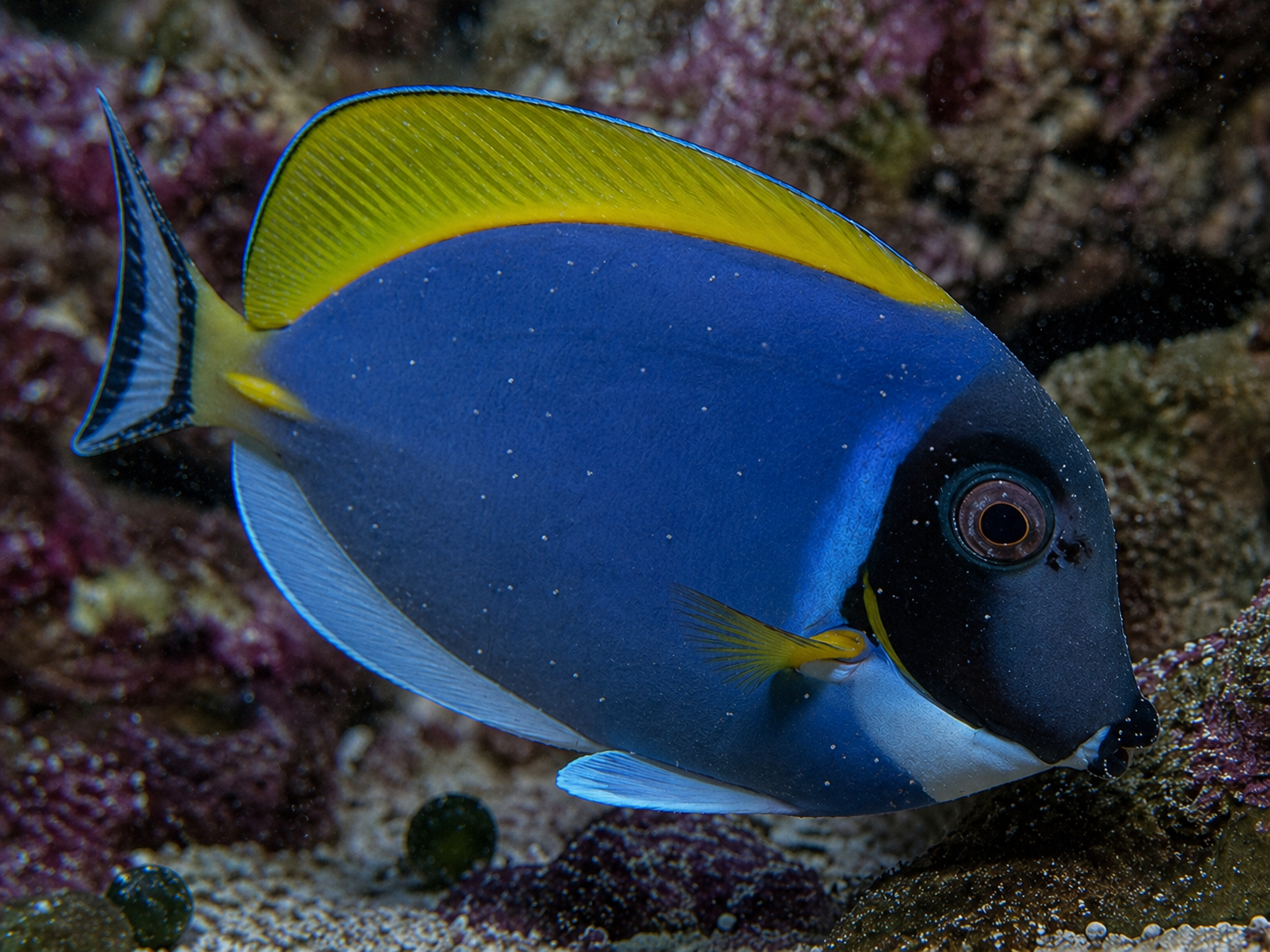
A ciliated protozoan parasite. Appears as small white salt-grain spots on fins, body, and gills. Fish flash, scratch, and breathe rapidly.
Threat Level
Harmful. Common cause of fish loss in saltwater tanks. Once in a system, it never fully clears without aggressive intervention.
Life Cycle
Four stages: trophont (feeds on fish), protomont (drops off), tomont (encysts and divides), theront (free-swimming infective stage). Full cycle is 7 to 28 days at reef temperatures, longer at lower temps. Only the theront and trophont stages can be targeted with treatment.
Recommended Removal
- Quarantine all new fish for 6 weeks minimum. Prevention is the only reliable defense.
- Copper treatment (Copper Power, Cupramine) in QT, gold standard.
- Tank Transfer Method, move fish to new clean tanks every 3 days for 4 transfers.
- Chloroquine phosphate for sensitive species.
- Display tank: 76+ days fallow with no fish to break the cycle.
- UV sterilizer reduces but does not eliminate.
Marine Velvet
Harmful (most deadly)
Description
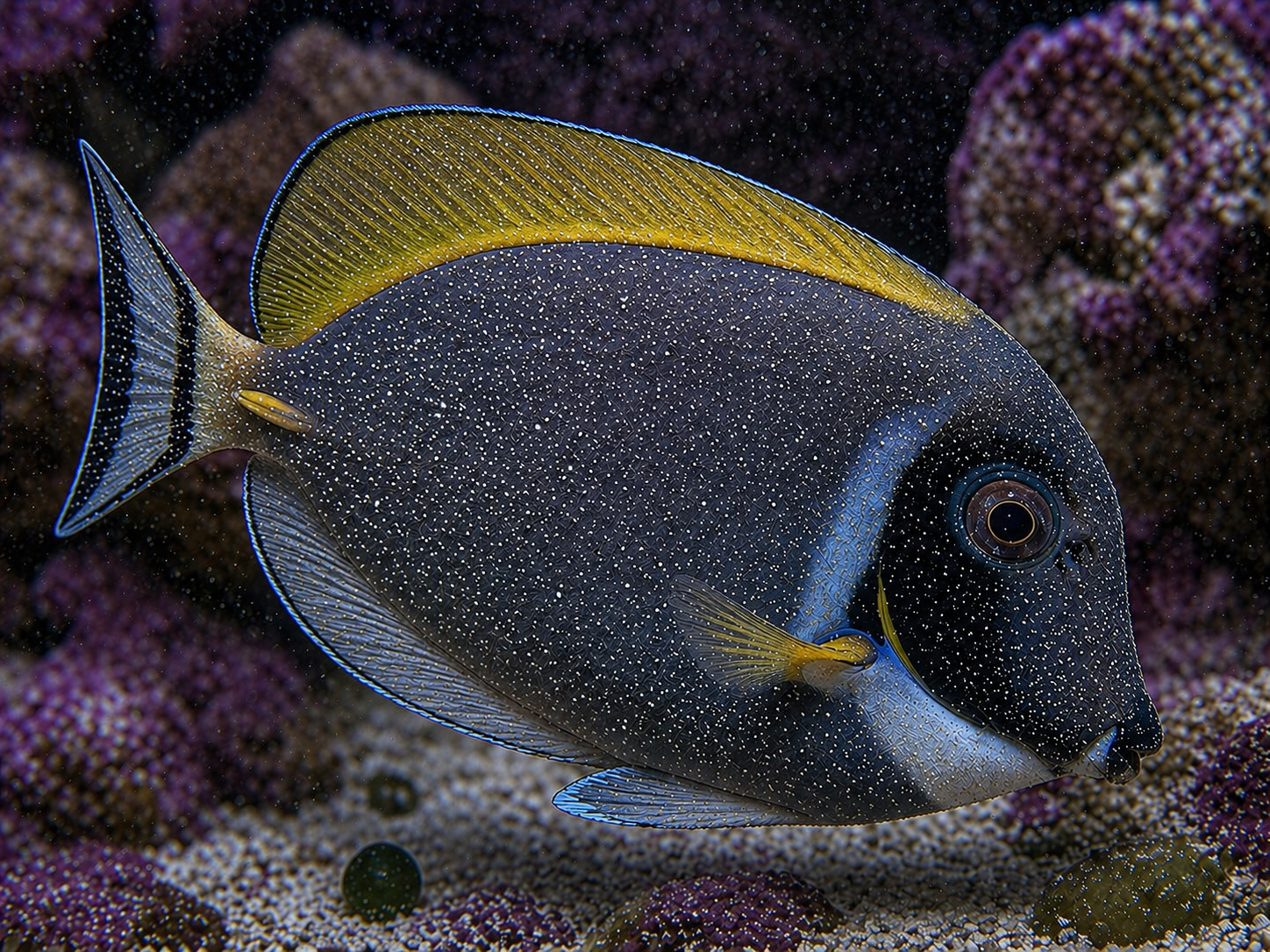
A dinoflagellate parasite. Appears as a fine gold or rust-colored dusting on fish, often easiest to see at the gills. Fish breathe rapidly and may scrape on rocks before showing visible symptoms.
Threat Level
Harmful, the most lethal common parasite. Can wipe out an entire stock list in 48 to 72 hours. Often misdiagnosed as ich until it is too late.
Life Cycle
Three stages: trophont (feeds on fish), tomont (drops off and divides into hundreds of dinospores), dinospore (free-swimming infective stage). Full cycle 7 to 14 days. Reproduces explosively, one trophont produces hundreds of dinospores.
Recommended Removal
- Copper treatment in QT, fastest acting against velvet.
- Chloroquine phosphate highly effective.
- Display tank: 76+ days fallow with no fish.
- Quarantine every fish, every time, with prophylactic copper or CP.
- UV sterilizer recommended for free-swimming stage.
Brooklynella (“Clownfish Disease”)
Harmful
Description
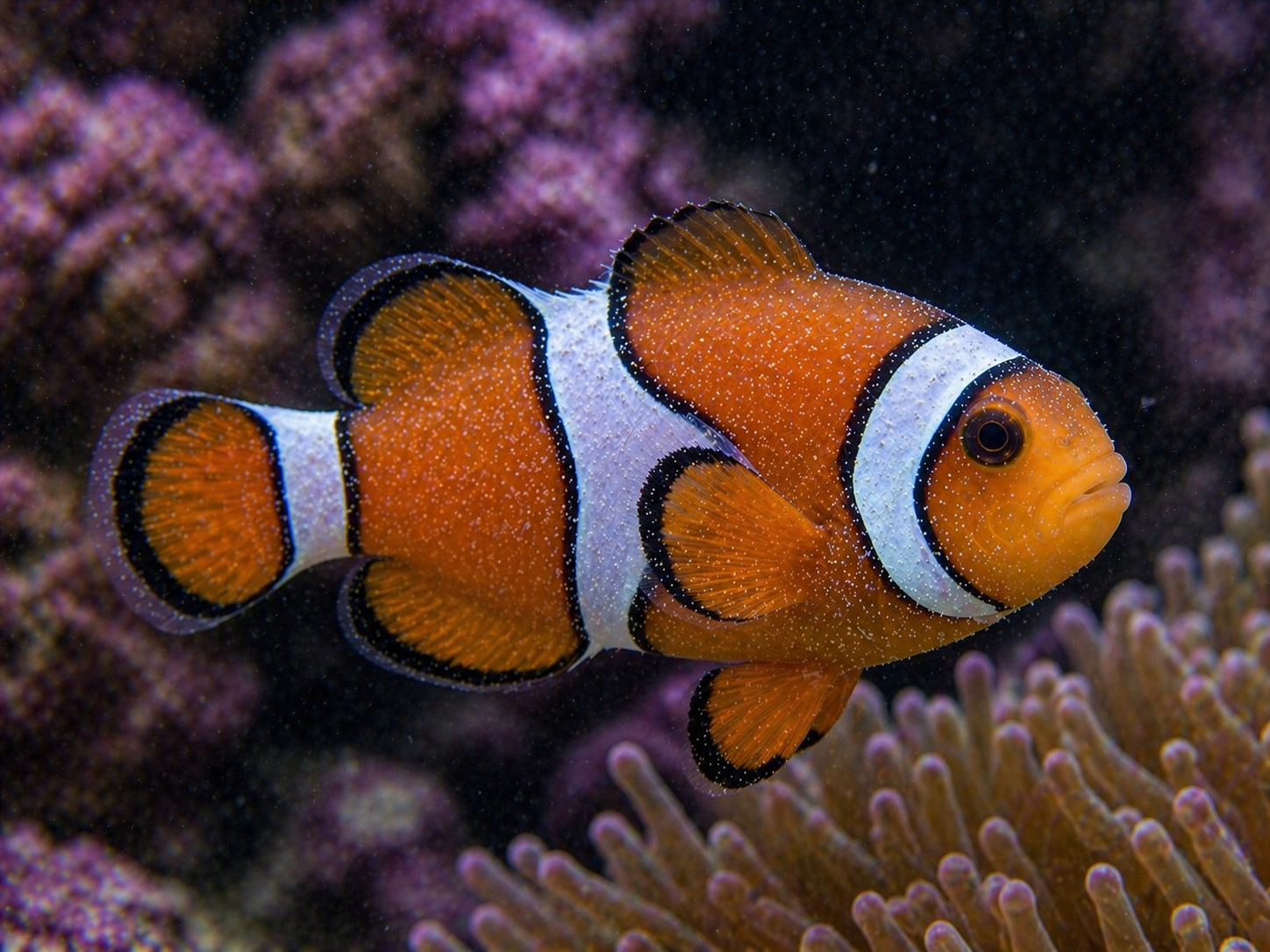
A ciliated protozoan that causes excess mucus production, sloughing skin (often visible as white patches that flake off), and labored breathing. Strongly associated with clownfish but affects others.
Threat Level
Harmful. Fast-acting and frequently fatal, especially in stressed fish.
Life Cycle
Direct life cycle on the fish, no off-host stage required. Reproduces by binary fission directly on the host, which is why it spreads quickly and copper does not work as well as it does for ich and velvet.
Recommended Removal
- Formalin baths, the standard treatment, very effective but stressful for fish.
- Freshwater dip (5 minutes, pH and temp matched) for immediate relief.
- Quarantine all new clownfish, especially wild-caught specimens.
- Copper alone is not reliable for Brooklynella.
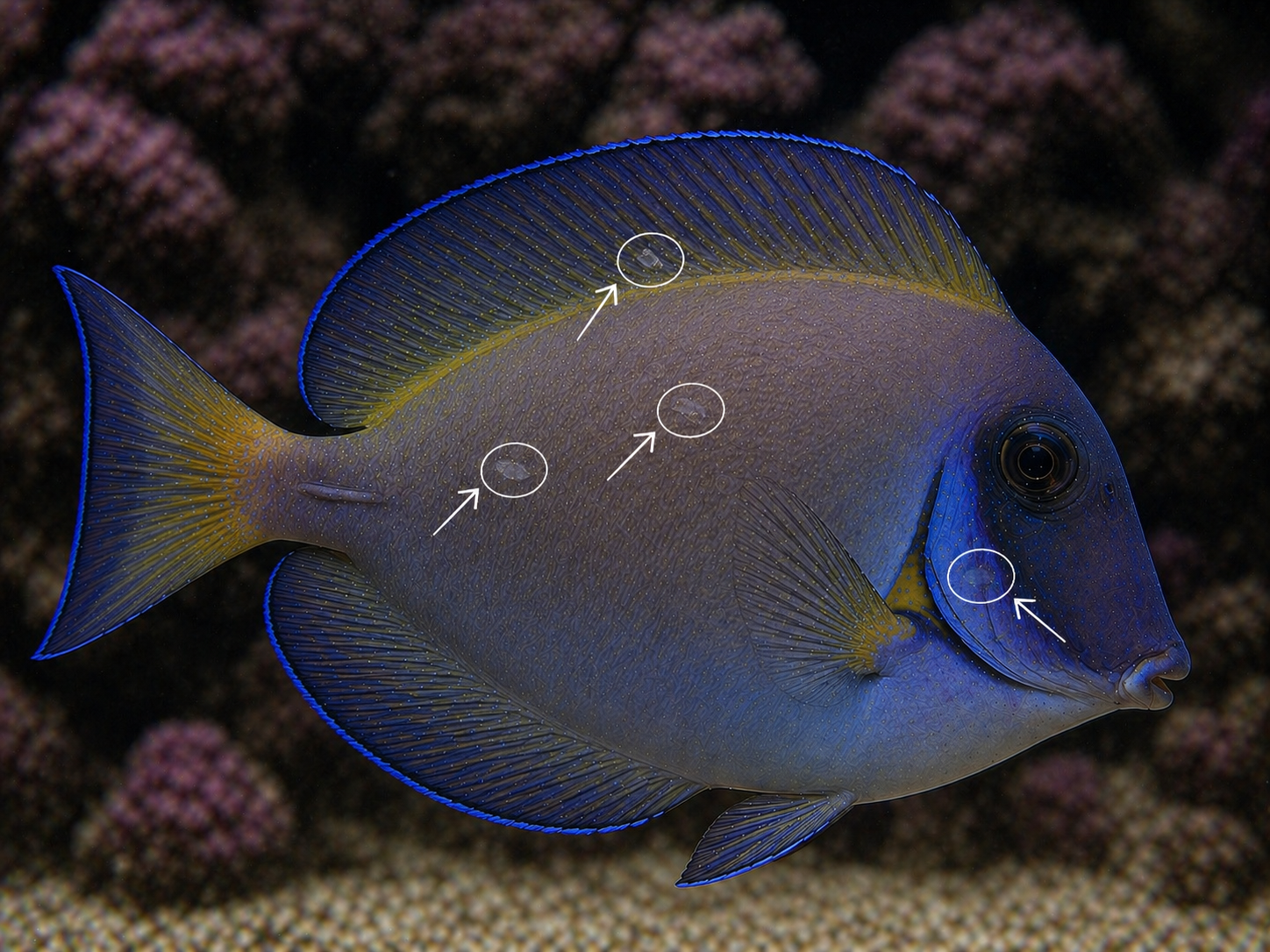
Flukes (Monogenean Trematodes)
Harmful
Description
Tiny flatworm parasites that attach to fish skin, fins, and gills. Mostly transparent and very hard to see except after a freshwater dip, when they detach and become visible.
Threat Level
Harmful. Cause flashing, glancing on rocks, faded color, cloudy eyes, and respiratory distress. Heavy infestations are fatal.
Life Cycle
Direct, host-specific cycle. Adults lay eggs that fall to the substrate, hatch into oncomiracidia, and find new hosts. Egg stage is resistant to most treatments. Cycle completes in 2 to 4 weeks at reef temperatures.
Recommended Removal
- Praziquantel (PraziPro), the standard treatment. Two doses 5 to 7 days apart to catch newly hatched parasites.
- Freshwater dips (5 minutes, pH/temp matched) for immediate reduction.
- Quarantine new fish with prophylactic prazi.
- Reef-safe in low doses but pulls oxygen from water; run extra aeration.